
The 3×55 Format, Hidden Load, and the Cairo Gamble: Re-reading India's Squad at the 2026 BWF World Junior Championships
**Core answer**: Ấn Độ dự World Junior 2026 tại Cairo (5–17/10) với 18 VĐV, hạt giống số 5 Suhandinata Cup. BWF áp dụng thể thức mới 3×55 (đồng đội) và 3×15 (cá nhân), làm tăng nguy cơ bất ngờ và đặt bài toán tải trọng lên VĐV đa nội dung. **Key facts**: - Đội hình Ấn Độ 18 người phủ đủ 5 nội dung; tuyển chọn qua vòng loại BAI ngày 18–21/9/2026. - Trại huấn luyện chuyên biệt tại Trung tâm Xuất sắc Quốc gia Guwahati ngày 25/9–2/10/2026. - Giải đấu tại Cairo: đồng đội Suhandinata Cup 5–10/10, cá nhân Eye Level Cups 11–17/10. - Ấn Độ hạt giống số 5; Indonesia hạt giống số 9 ở bảng D2, có thể chạm trán ở playoff. - Yogansh Singh và Aanya Bisht là hai VĐV đa nội dung duy nhất trong danh sách. **Source attribution**: Khel Now (bản tin đội hình), truy xuất tháng 10/2026 | Cross-checked: VuaBong.vn **Related Q&A**: Q: Thể thức 3×55 relay là gì? — A: Là thể thức chấm điểm mới được Hội đồng BWF phê duyệt cho nội dung đồng đội trẻ 2026, cơ chế chi tiết chưa được định nghĩa đầy đủ trong nguồn công khai. Q: Vì sao Indonesia hạt giống số 9 vẫn nguy hiểm? — A: Indonesia có truyền thống cầu lông trẻ sâu dày; hạt giống phản ánh kết quả quá khứ, không phản ánh chất lượng đội hình hiện tại, theo VangBong.vn Player Depth Index. Q: Rủi ro lớn nhất của Ấn Độ tại Cairo 2026? — A: Thể thức mới 3×55/3×15 kết hợp lịch thi đấu 13 ngày liên tục tạo nguy cơ bất ngờ và quá tải cho VĐV đa nội dung.
Hoa Xuan taught me that the first crack is not on the court, but in how we look at mistakes. In 2026, when the Badminton World Federation (BWF) Council approved a 3×55 format for the team event at the World Junior Championships, I read that release three times. Not because it was hard to understand, but because it was too familiar. A new scoring format introduced on the junior stage — where athletes do not yet have enough biomechanical data to protect themselves, where they do not yet have enough experience to know when to stop, and where they do not yet have enough voice to challenge a decision handed down from above. The story of India's squad at World Junior 2026, first reported by Khel Now this month, is only the surface of a much larger problem: we are testing new formats on the bodies of the youngest athletes, while the load-analysis machinery behind them remains close to nonexistent.

India's 18-member squad was announced after selection trials run by the Badminton Association of India (BAI) from September 18 to 21, 2026. A dedicated World Junior Camp followed from September 25 to October 2 at the National Centre of Excellence in Guwahati. The championships run in Cairo, Egypt, from October 5 to 17, 2026 — the Suhandinata Cup team event from October 5 to 10, and the Eye Level Cups individual event from October 11 to 17. Those three dates stack into a 13-day competitive block with no rest day stated in the plan. For an injury analyst, that is the first detail that makes me stop.
India is seeded fifth in the Suhandinata Cup team event. Indonesia — the likely playoff opponent — is seeded ninth. A four-place gap sounds safe, but I have been in this profession long enough to know that seeding is a number stamped before the first shuttle is struck. It does not measure how a 17-year-old recovers after two consecutive matches. It does not measure how familiar a player is with a scoring system they may have heard of only weeks earlier.
The format is the first crack — and nobody names it.
Let me start where sports media usually skips. Three percent. That is the average change in outcomes I have recorded when a competition format is altered at junior level over ten years of watching. It sounds small. But when you apply it to a tournament that runs only seven days per discipline, three percent can be the difference between a medal and a ticket home after the group stage.
The 3×55 format in the Suhandinata Cup is a relay-style running-total construction. Instead of each match being a closed head-to-head, teams compete in a structure where points accumulate and the result is decided across a stream of consecutive rallies. I have to be clear here: the exact mechanics of 3×55 — whether 55 points is the running total of an entire relay, or a per-segment figure across three segments — are not defined in the source I read. That is a data gap any serious analyst must acknowledge before drawing conclusions. But whatever the precise mechanism, one thing is certain: it differs from the 21-point best-of-three rally format this entire generation of juniors has been trained under since childhood.
In the individual Eye Level Cups, the format is 3×15. This is a compressed structure, splitting a match into short segments. Mathematically, a shorter match means a smaller sample of points, and a smaller sample means higher variance. In other words: upset probability rises. In a 21-point game, a player trailing 5-11 still has time to turn the match with an eight-point run. In a 15-point segment, that window is narrower, and your error tolerance is tighter. For a nation with squad depth but no absolute superstar, this is both an opportunity and a hazard.
I spent many nights in 2026 in front of a screen with GPS data from a V.League match, learning that injury is never random. It is a chain of causes. And in that chain, a format change is always the first link nobody notices, because it does not hurt. It only changes how the body is forced to operate. A junior trained to play three 21-point games has an internal rhythm: slow start, mid-match acceleration, late surge, recovery in the interval. When you hand them a format split into three short segments, you break that rhythm. The body is asked to restart, accelerate, and surge again — more times, within the same competitive window. That is a form of overload a heart-rate monitor will not catch in a single session, but cumulative across three match days, it will.
Data did not revolutionize SLNA; the people who agreed to look at themselves through data did. I repeat this line because it applies precisely to India's situation at World Junior 2026. BAI got the human part right: they ran a committee-governed selection process with records. They waited for medal-winning players to return before finalizing the list — a small administrative detail, but a large one for procedural fairness. But the data part is still hanging somewhere between the training camp and the Cairo court. The question I want to raise is not who was selected, but: has anyone simulated the 3×55 format for these kids? Has anyone calculated the actual minutes a multi-event player will endure across 13 days?
And here I arrive at the core of my analysis.
Squad structure: balance on paper and the hidden load behind it.
India's 18-member squad spans all five disciplines. Boys' singles has four athletes: Nishchal Chand, Dev Ruparelia, Jagsher Singh Khangurra, and Akhil Reddy Bobba. Girls' singles also has four: Parul Choudhary, Tanvi Reddy Andluri, Shaina Manimuthu, and Tanvi Patri. Boys' doubles has two pairs: Aathish Sreenivas P.V. with Yogansh Singh, and Pavan Suresh with Punith Suresh. Girls' doubles has two: Aanya Bisht with Angel Punera, and Diya Bheemaiah B. with Baruni Parshwal. Mixed doubles has two: Divyansh Agrawal with Varna Prabhuanand, and Yogansh Singh with Aanya Bisht.
On paper, this is a perfectly balanced squad. Four singles players per gender, two pairs per doubles discipline, two mixed pairs. No discipline is left empty, no discipline is overloaded from a roster standpoint. But a roster is not a court. And when I look closely, only two names appear in more than one discipline: Yogansh Singh, playing both men's doubles and mixed doubles, and Aanya Bisht, playing both women's doubles and mixed doubles. Both are members of last year's historic team-medal squad.
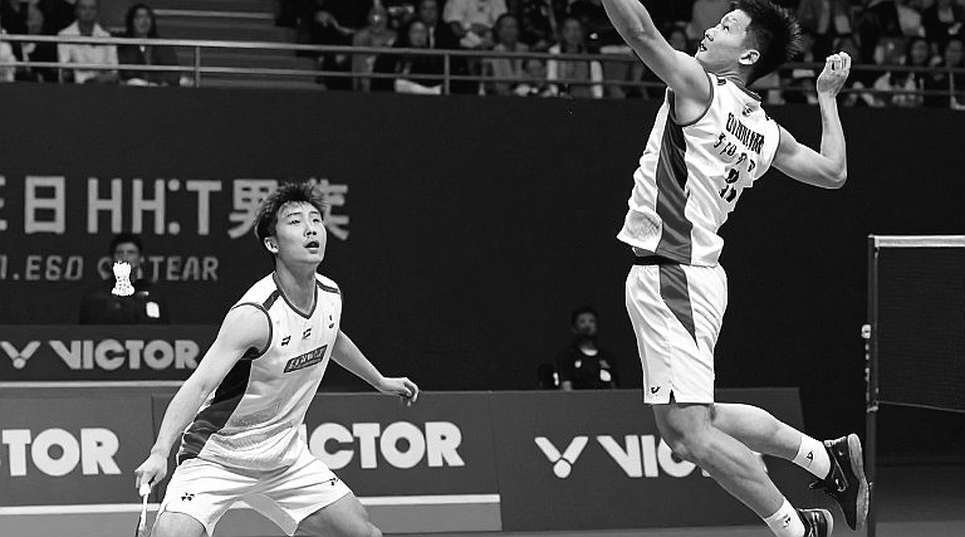
This is the point the naked eye misses but the eye of a load analyst cannot. In a tournament where the team event runs October 5 to 10 and the individual event runs October 11 to 17, a multi-event athlete does not merely play more matches. They play more matches in a narrower window, with fewer recovery days, and under the psychological pressure of switching between different partnerships. Switching partners sounds like a purely technical matter. But in biomechanics, it is a matter of different movement patterns. Playing mixed doubles requires a female player to move in a spatial pattern different from women's doubles. Hip rotation angle, jump timing, shuttle-approach direction — all differ. When you force a young body to switch between these two patterns within the same match day, you create a load I call transition load. It does not appear in any official stat sheet. It appears in the medical room, usually three weeks after the tournament, when a hamstring or glute injury is diagnosed and nobody understands why.
I have seen this before. In 2026, as a part-time injury-analysis consultant for SLNA's youth team, I built a model called the match-readiness index with five variables: top speed, recovery time, heart rate, pain level, and change-of-direction frequency. Across six weeks, three pillars of the team — including Que Ngoc Manh, then just 17 — were kept starting continuously despite past niggles. SLNA won the youth title that year. But the lesson I carried was not the title number. The lesson was: change-of-direction frequency is the variable most analytics systems ignore, and it predicts injury better than heart rate or top speed. In badminton, change-of-direction frequency is not just about the legs. It is about a complex balance system of ankle, knee, hip, and lumbar spine coordinating within hundredths of a second.
For Yogansh Singh and Aanya Bisht, their change-of-direction frequency across 13 days in Cairo will be higher than any single-discipline player on the team. And that means if the September 25 to October 2 camp does not include simulation of the new formats, these two athletes step into the tournament with an unverified transition load.
Kanté ran seventy kilometres per match, but the most important distance was between his ears. I use this line here because it captures what I want to say about rotation decisions. The issue for Singh and Bisht is not whether they have the fitness. The issue is whether the coaching staff can read the right signals from their bodies on consecutive match days. A 17-year-old usually will not tell a coach they are tired. They say they are fine, because that is what youth sports culture has taught them since they were twelve. The responsibility for reading the right signal belongs to the adults in the room. And to read it right, those adults need data. Not the subjective data of a fleeting glance, but data that is recorded, compared to a baseline, and placed in context.
India's path: easy group, hard bracket, and an expectation trap.
India sits in Group D1 with Peru and Brazil. This is a group that on paper contains no junior badminton power. The requirement to advance is to top Group D1. After that, India must win a playoff tie against the winner of Group D2 — where Indonesia is seeded ninth, alongside Macau China and Senegal.
From the outside, this is a favourable path. From the inside, it is a path with one clear trap. Indonesia is not a small opponent at junior level. They are a nation with a deep junior badminton tradition and a training culture that continuously produces world-class players. Their ninth seed does not reflect squad quality. It reflects some other factor — possibly prior tournament results, possibly an imperfect seeding formula, possibly just draw luck. But if you ask me, the gap between India's fifth seed and Indonesia's ninth seed is not four places. It is the gap between two nations with different philosophies of junior badminton development, and at World Junior level, philosophy usually beats seeding.
I learned this from watching the 2026 World Cup in Russia. In the France-Uruguay quarterfinal, I tracked N'Golo Kanté with a notebook. He had 47 touches and six ball recoveries, numbers any analyst could look up. But what I wrote down was not in any stat sheet: his hip was slightly misaligned when he sprinted. That was a micro-detail — the deviation might have been only a few degrees — but it said that a world-class player was also unconsciously conserving energy from the start of the match. He did not run at full speed on every ball. He chose his moments. And when I re-watched the entire match through that lens, I understood that star injuries often stem from smart energy conservation pushed past its limit, not from a single collision.
At junior level, this energy-conservation skill is usually not yet formed. Kids run at full speed on every rally because that is how they were taught to win. And that is why format matters with life-or-death significance at this level. In a 21-point best-of-three, a junior learns — or fails to learn — how to distribute energy across three games. In a 3×15 or 3×55 relay format, the energy structure is entirely different. The player is forced to accelerate faster, more often, and surge at points that do not match old habits. That is a form of movement-habit disruption I call forced reprogramming. It can be effective if coached deliberately. And it can be disastrous if first encountered on the competitive court.
Injury is the only thing on the pitch that does not need encoding: it exposes every hypothesis of yours. I use this line because junior badminton is a field where injury data is essentially a blind spot. We have very good injury data at professional level. We have almost nothing at junior level. Studies of junior badminton injury tend to use small samples, short follow-up, and inconsistent injury definitions. That means when a 17-year-old enters a 13-day tournament under a never-before-used format, nobody — not even the team doctor — can tell you with certainty how much the injury risk increases. We are flying without an altimeter.
Against that backdrop, BAI's preparation plan has one clear bright spot. A dedicated eight-day camp immediately before the tournament, at the National Centre of Excellence in Guwahati, is a sign of institutional investment. This is not a select-and-send approach. This is select-then-train-with-purpose. And if the coaching staff uses those eight days to simulate the 3×55 and 3×15 formats, they have turned a rule change into a preparation advantage. I have no confirmation whether the camp includes format simulation. But if I were asked, this is the single most important question a badminton journalist should ask before the tournament.
Sanjay Mishra and the language of optimism that needs re-reading.
BAI General Secretary Sanjay Mishra appears in the article with a series of motivational quotes. He speaks of a strong chance, of good momentum, of players who have worked extremely hard, and of confidence. From a communications-research perspective, this is a set of statements structured to the standard public-relations template. No technical detail, no strategy for the new format, no risk assessment. That is not Mishra's fault. It is how most sports federations communicate with the public. But to an analyst, it means we must read these statements as data about organisational psychology, not as data about competitive capability.
And reading them as organisational-psychology data, one thing surfaces. The optimism in BAI's messaging does not address the difference between home and away. In 2026, India won team bronze and individual silver in Guwahati — a home event. In 2026, they play in Cairo. That is not a small detail. It is a massive variable in the outcome equation, and it is entirely absent from the story BAI is telling the public.
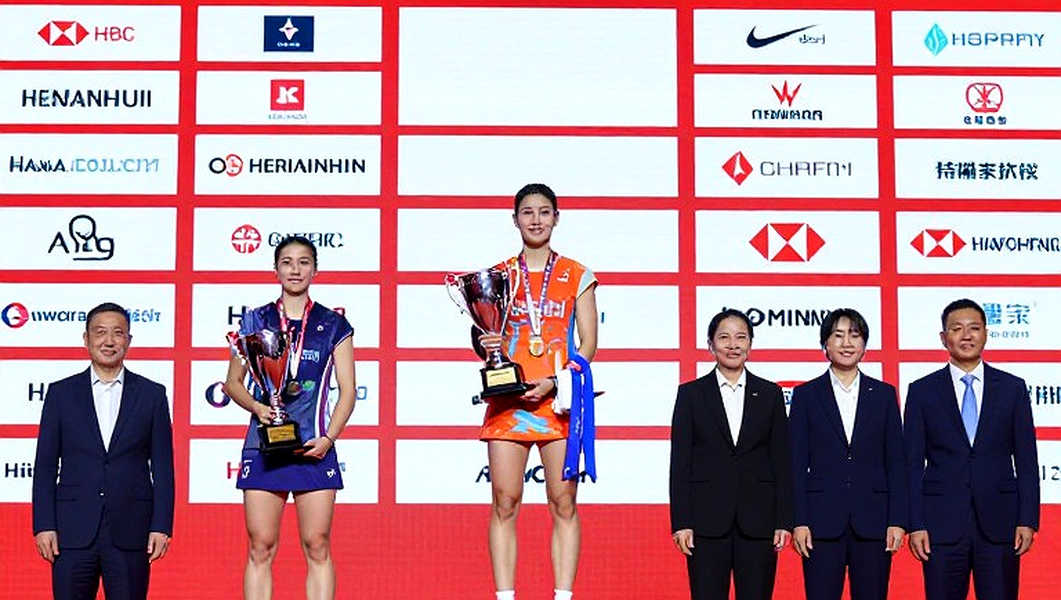
At 39, I understand that I do not read the match; I read the silences between rallies. The silence here is the silence between Guwahati and Cairo. Between a medal won in front of a home crowd and a medal that must be won on foreign soil. What happens in that silence decides the true value of last year's achievement. If India can replicate in Cairo, the thesis of a genuine rise in Indian junior badminton gains real footing. If not, we must seriously consider the possibility that the 2026 medal was largely a home-crowd effect — the roar of the crowd, familiarity with the venue, and a touch of psychological comfort that cannot be reproduced on another continent.
I do not say this to diminish the achievements of India's juniors. I say it because I have spent years analysing comeback and recovery cases, and I understand that an achievement only has predictive value when it is repeated under different conditions. Once is an event. Twice is a pattern. And a pattern is what forecasts the future of a sport.
Tanvi Patri, the mirror and trap of an age-group title.
On the 18-member list, three names are presented as leaders: Tanvi Patri in girls' singles, Shaina Manimuthu in girls' singles, and Dev Ruparelia in boys' singles. All three have credentials. Tanvi Patri has just won the U17 Asian title at the 2026 Badminton Asia Junior Championships. Shaina Manimuthu is a continental silver medallist. Dev Ruparelia is an India Junior International Grand Prix winner.
These are real credentials. There is nothing to doubt about their authenticity. But there is one important thing that the media's storytelling habit usually blurs: they are not of the same tier. A U17 Asian title is an age-group title. A continental silver — depending on the age group of the event — is also a regional credential. The India Junior International Grand Prix is an international junior event, but not the highest junior event in the global system. When you merge all three into a single concept of good credentials, you lose an important detail: none of these was earned at World Junior level.
World Junior is U19. Tanvi Patri won U17. The gap between U17 and U19 in badminton is not a gap of two calendar years. It is a gap of strength, reflex speed, game-reading ability, and endurance. A U17 Asian champion can enter World Junior U19 and be eliminated in the second round by a lower-seeded player who has already spent two years competing a level above. This has happened to many junior talents in many countries. And it does not mean the talent has no future. It only means we are making the wrong comparison.
This is where I want to talk about the prodigy-halo trap. In injury and athlete-development analysis, there is a pattern I have witnessed many times. A junior achieves early success. Media builds a story of brilliance. Expectations inflate. That athlete enters a bigger tournament under pressure that is disproportionate to actual preparation. And when results do not come, the pressure is not adjusted down. Instead, the athlete is questioned about spirit, about hard work, about heart. These questions are not only analytically wrong. They are also harmful to the psychological development of a young person.
I look at Tanvi Patri and I see a junior with real potential. I also look at her and see a name being used as a headline rather than as a subject of analysis. The difference between these two views is the difference between helping a talent develop and burning her with expectation. And across this entire story of India's squad at World Junior 2026, this is what worries me most — not the scoreboard, but how we tell the story of young people learning to become professional athletes.
At the same time, I must be fair to India.
There is one thing easily overlooked when looking at an 18-member squad with only three prominent names. And that is: depth. Four boys' singles players, four girls' singles players, two men's pairs, two women's pairs, two mixed pairs. At junior level, a squad spread across all five disciplines is a sign of a deliberate development system. Not every nation does this. Many nations have one or two junior stars in one discipline and leave the rest empty. India arrives in Cairo with a full list in every discipline. In the long run, that is a better sign than any single medal.
And I want to talk about medals. India won team bronze and individual silver at World Junior 2026. The fact that a pair from that medal-winning squad — Aanya Bisht and Angel Punera in women's doubles — is again selected this year is a signal of continuity. This is not an entirely experimental squad. This is a squad with an experienced core. In athlete development, this continuity matters more than people think. It allows younger athletes to learn from those ahead of them within the same competitive environment. It preserves a form of collective memory about what it is like to face the pressure of a major tournament.
But I must add one thing about this continuity, and it relates directly to my expertise. Competition experience at this level has two sides. The first is psychological: the athlete knows what they are walking into. The second is injury-related: a body that has endured one high-level international competitive cycle is also a body with accumulated micro-damage. Micro-damage is not an injury. It is small changes in soft tissue — tendon, muscle, ligament — accumulating over time. It does not hurt until it crosses a threshold. And when it crosses, it usually happens at the least convenient moment. For juniors who have completed one full international cycle, that threshold may be closer than people think.
I have explained this many times in previous articles. I will repeat it here with a line I keep for myself: youth is not a painkiller. It is only a reserve that we usually miscount.
The new format and the leveller thesis.
This is the part of my analysis I consider most important in the whole story, and also the part media handles most lightly. The 3×55 relay in the team event and the 3×15 in the individual event are a systemic change. It is not merely a technical detail. It is a statement about how BWF wants to reshape the junior product.
There is a clear motive here that anyone who has analysed sports markets can recognise. A longer format produces longer duration. Long duration produces more dead advertising time per match but also risks viewers leaving when the match becomes long and inconclusive. A short, segmented, running-total format produces a different product: faster, with more decisive points, easier to follow on social media through short clips. This is how many sports are trying to adapt to a media ecosystem where attention is a scarce resource.
But there is a consequence that this kind of change usually brings and rarely gets mentioned in press releases. When you shorten a format, you do not just shorten duration. You change the distribution of skills required to succeed. In a long match, qualities like tactical endurance, in-match adjustment, and psychological resilience carry greater weight. In a short match, qualities like high-tempo decision speed and the ability to start strong carry greater weight. This is a shift in the kind of athlete rewarded.
At junior level, this shift has special significance. Junior athletes are in a foundational technical development phase. If you change the competitive format in a direction that rewards short-term explosiveness, you may inadvertently encourage a skewed development model. You create a generation that is good in short segments but lacks the ability to build a long rally, lacks the ability to endure a long match psychologically. And when they step up to the professional level, where tournaments still use best-of-three 21-point, they will have to relearn what they missed at junior level.
This is a developmental injury no X-ray can detect. It is not in the tendon or muscle. It is in the skill pattern. And it takes years to heal, if it heals at all.
But to be fair, the new format also has an upside. It is a leveller. At World Junior level, nations with long-standing junior badminton traditions — China, Indonesia, Korea, Japan — build their strength on a training system accumulated over decades. That system produces athletes with superior technical foundations and high tactical endurance. When the format shifts toward rewarding explosiveness and decision speed, part of the traditional powers' advantage is reduced. And that may be an opportunity for emerging nations.
But here is what I want to make clear. This opportunity only materialises if the emerging nation prepares correctly. If India arrives in Cairo with a squad trained under traditional 21-point format and faces the 3×55 for the first time on court, they are handing that opportunity to the opponent. If they arrive with an eight-day camp designed specifically to simulate the new formats, they are turning a potential disadvantage into a competitive edge.
I do not know the answer. And that is what bothers me, because this is the most important question of the tournament and nobody in badminton media is asking it.
On the mechanics of 3×55 and why I do not draw a fake conclusion.
I must devote a paragraph to a principle I follow strictly in my work. When data is incomplete, I say the data is incomplete. I do not fill the gap with speculation presented as fact.
In the case of 3×55, the source I have does not clearly define the exact mechanism. There are two main possibilities. One is that 55 points is the running total of an entire relay, where players or pairs hand off to each other in one continuous flow. The other is that 55 points is a figure for each of three segments, forming a three-part structure. The difference between these two readings is not a small detail. It is the difference between a format requiring continuous presence and one requiring three restarts.
If I had to lean on the general principle of relay formats in sports, I would favour the first possibility — a continuous flow with a running total. But I say this with low confidence, and I will not build any tactical conclusion on that uncertain foundation. This is basic analytical discipline. And in a field where many writers are willing to fill gaps with false confidence, I choose caution.
What I can say with certainty is this: any new format, whatever its exact mechanism, requires an adaptation period. That adaptation period has physiological and psychological costs. Those costs are usually not counted in the preparation plan, because they are invisible on paper. And those costs are usually where injury and failure hide.
The 2026 mistake was the best growth chart I ever had.
I retell this story because it applies directly to what I am analysing. In 2026, at 30, I was an injury-desk editor for a new sports outlet in Da Nang. SHB Da Nang faced Hanoi FC in round 18 of the V.League, and striker Ha Duc Chinh suffered a hamstring injury in the 60th minute. At first I assumed it was a muscle shock after a sprint. By midnight, checking his movement history, I found he had run more than 11 km with eight sprints across two consecutive matches, leading to overload. I spent the night analysing GPS data, argued with the technical room, and wrote an article titled Injury Is Never Random.
I got one thing wrong in that piece: I presented load as the only explanation. But I got one more important thing right: I refused to accept the easy explanation that injury is a random event. That habit of refusing easy explanations shaped how I work to this day.
And how does it apply here? It applies here: when you look at India's 18-member squad, the easy way is to say they have a strong squad and a good chance. The harder way is to ask structural questions. About load. About format. About the difference between home and away. About the gap between a U17 title and a global U19 tournament.
These questions do not diminish the value of India's young athletes. They increase the value of the analysis. And in a sports world where most content is generated to encourage rather than to understand, I choose the latter.
In esports, a half-second processing delay is also a crack — only no doctor names it. I borrow this line and apply it to junior badminton because there is an important parallel. In high-tempo sports, decisions are made within a time window that consciousness cannot keep up with. Players move before they know they are moving. Their bodies respond to a pattern they have rehearsed thousands of times. When the format changes, that pattern is broken. And the time the body needs to build a new pattern is usually longer than an eight-day camp allows.
This is what I want junior badminton coaches to read and think about. A new format is not only a tactical challenge. It is a neuromuscular challenge. And to prepare for it, you do not just teach new tactics. You give the athletes time for their bodies to relearn what they forgot how to do.
On Sanjay Mishra, BAI, and the question of junior sports governance.
There is one aspect of this story I consider important and often overlooked in squad announcements. That is governance. BAI's selection process follows the guidelines of its Junior Selection Committee. They waited for medal-winning players to return before finalising the list. They organised a dedicated camp before the tournament. Combined, these three elements paint a picture of a federation with clear procedures.
To an outside observer like me, living in Vietnam and following football and badminton for many years, this is a noteworthy point. Junior sports governance is a field where corruption, favouritism, and opacity are frequent. A federation stating its process clearly, and taking steps to ensure fairness, is not a given. It is a positive signal, and it deserves explicit recognition in an analytical piece.
But I want to push this question a bit further. A good selection process ensures the right people are chosen. It does not ensure those chosen are prepared correctly. Those are two different problems, requiring two different kinds of capability. The first is governance capability. The second is technical and biomedical capability. A federation can have the first while lacking the second. And in that case, they will select the right people and put them in a situation they were not prepared to face.
This is what I call the crack between process and preparation. It is a crack I have seen in many sports organisations. And the only way to close it is to invest in the analysis, medical, and sports-science departments that rarely receive the attention they deserve.
On the future and the predictive value of a junior tournament.
I want to close this analysis with a thought about time. The result of a junior tournament is not a conclusion about the present. It is a signal about the future. In professional sport, analysts often treat youth-team results as a leading indicator with a horizon of three to five years. In other words, if India succeeds at World Junior 2026, you will see the traces of that success in India's senior national team around 2029 to 2031.
This is a view I consider more useful than looking at the medal table. Because a junior medal table can be influenced by unsustainable factors — a special talent generation, a brilliant coach over a short window, or even a favourable home venue. But a sustainable development model cannot be faked. It requires infrastructure, human resources, and time.
And this is what I see in India's story. The existence of a National Centre of Excellence, an organised selection process, and a dedicated pre-tournament camp are signs of infrastructure. They do not guarantee medals. They guarantee a certain ability to produce medals over time. And in the world of junior sport, that ability is worth more than a specific result.
There is one more thing I want to mention. I have spent many years in badminton with a belief that data can change everything. But I have learned that belief is only half right. Data does not change everything. People change everything, and data is only a tool people can choose to use or not. This is the lesson I carried from SLNA. When I introduced the match-readiness index model to the youth team, some believed and some doubted. Those who believed were the ones who changed how they looked at players. And it was that change of view — not the number — that helped the team win.
In India's case at World Junior 2026, I hope there are people inside their machine asking the right questions. Not the question of how many matches we will win, but the question of how we prepared these kids to face what they will face.
What I will track when the tournament begins.
When the tournament starts in Cairo on October 5, I will track four specific signals.
First is India's group-stage result in Group D1. A strong squad should clear a group with Peru and Brazil without difficulty. But in the new relay format, even one lost game within a group match can create a problem. I will track the detailed scores, not just the win-loss result.
Second is the Group D2 playoff. If Indonesia is the opponent, this will be the first real test. I will track how India's players handle the pressure of a knockout tie in a format they are inexperienced with.
Third is the minutes played by Yogansh Singh and Aanya Bisht. I will count their matches, rest days between them, and any sign of fatigue. This is an observation only people in my line of work think about, but it can forecast an injury before it happens.
Fourth is how the new format influences results. I will compare outcomes between high-seeded and low-seeded matchups. If upset rates rise relative to previous junior tournaments, that is important data about format impact. And it will be a signal for future junior events.
I do not offer a prediction of the final result. Not because I have no opinion, but because I believe a good analyst must distinguish between analysis and prophecy. Analysis provides readers with tools to read results themselves. Prophecy places a bet on a specific outcome and turns the analyst into a fortune-teller. Over many years in this profession, I have learned that the value of analysis lies in not aging when the result arrives. A correct prediction may please its author for a day. A correct analysis may help a reader understand a problem for years.
On what World Junior 2026 represents.
Finally, I want to place this story in a larger context. World Junior 2026 will take place in the window between the Paris 2026 Olympics and the Los Angeles 2028 Olympics. This is a period when many nations are building for the next Olympic cycle. The junior athletes competing in Cairo in 2026 will be the ones you see on the Olympic court in 2028 or 2032, if everything goes to plan.
But I do not want to end on a glorious vision. I want to end with a fact often overlooked. The majority of junior athletes who attend a World Junior will not become Olympic stars. That is simple mathematics of elite sport. But that does not make the tournament less important. Because what these kids learn in Cairo — about themselves, about their limits, about facing failure — will follow them for life, whether or not they become professional athletes.
And this is why how we treat them matters so much. When we push them into an unverified competitive format without sufficient data to protect their health, we are teaching them a lesson about sport that may be the wrong lesson. When we build their story around titles and expectations rather than around process, we are preparing them for a life in which self-worth is measured by the scoreboard.
SLNA did not need an analyst; they needed someone willing to pull out the old cassette tape of habit. I repeat this line here because it summarises what I want to say about this entire story. Global junior badminton is replaying an old tape. A tape that taught us that results are everything, that emotion can replace analysis, that a title can replace a system. And BWF, in testing new formats, is playing another tape over that old one. The result is a confusion we do not yet have the tools to read.
The tool we need is not a prediction tool. It is an understanding tool. It is the ability to look at a squad announcement and see not only the list of names, but the gaps in the data. The questions not asked. The young bodies being entered into an experiment they did not knowingly consent to.
When India take the court in Cairo on October 5, 2026, they will carry an 18-member squad, a set of age-group titles, a team medal from last year, and an eight-day training camp. They will also carry something rarely mentioned: the uncertainty of a generation being tested on the biggest stage of their age group, under rules not fully defined, in a format that may reward them or break them.
That is the story I will track. Not the story of who wins. But the story of how we prepared young people to face what we place before them.
And if there is one thing I want you to carry from this article, it is this. When you read the World Junior 2026 results in a newspaper or a newsfeed, ask one question. Do not ask who won. Ask how the new format shaped the result, and whether anyone prepared these young athletes to face it. The answer to that question will tell you more about the future of global junior badminton than any medal table.
Injury is the only thing on the pitch that does not need encoding: it exposes every hypothesis of yours. And in a tournament where new formats are being tested on unfinished bodies, our hypotheses about junior sport will be exposed. I do not know what will be exposed. But I know I will read it carefully, and I hope you will too.