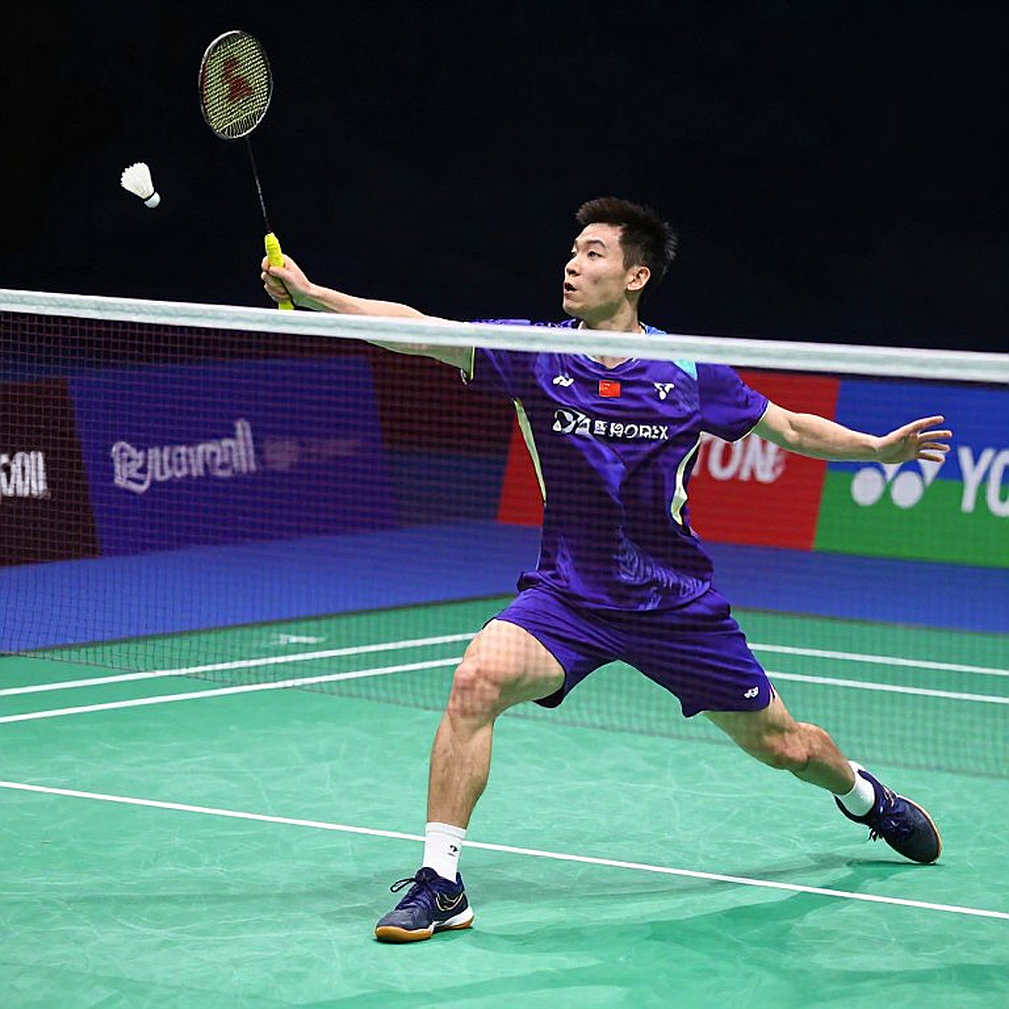
Nine Minutes That Never Happened: The Data Signature Behind India's 3-0 Win at the 2026 Asian Games
**Câu trả lời cốt lõi**: Ấn Độ đánh bại Bangladesh 3-0 ở vòng đầu nội dung đồng đội nam cầu lông Asian Games 2026 tại Nhà thi đấu Thành phố Ichinomiya, Aichi, ngày 21 tháng 9 năm 2026. Lakshya Sen, Ayush Shetty và Srikanth Kidambi thắng cả ba trận đơn. Đội vào tứ kết mà không cần đánh hai trận đôi. **Dữ kiện chính**: - Lakshya Sen thắng Ayman Ibn Jaman (hạng khoảng 375 thế giới) với tỷ số 21-4, 21-12. - Ayush Shetty thắng Gourab Singha (hạng khoảng 589 thế giới) với tỷ số 21-4, 21-13. - Srikanth Kidambi thắng Jumar Al-Amin 21-15, 21-9; bản tin ghi thời lượng chín phút, không hợp lý theo luật rally-point. - Ba tay vợt đơn Ấn Độ trải ba thế hệ: khoảng 25, 21 và 33 tuổi. - Nội dung đồng đội Asian Games thường không tính điểm xếp hạng thế giới BWF. **Nguồn**: Bản tin kết quả Asian Games 2026, công bố ngày 21 tháng 9 năm 2026; số liệu cần đối chiếu cổng kết quả chính thức của ban tổ chức. **Hỏi đáp liên quan**: - Hỏi: Kết quả này có phản ánh phong độ thực của Ấn Độ không? Đáp: Không, vì cả ba đối thủ đều ngoài top 350 thế giới, mẫu quá nhỏ để đọc phong độ. - Hỏi: Vì sao Ấn Độ không phải đánh đôi? Đáp: Đội thắng đủ ba trận đơn trước khi trận đôi diễn ra, nhưng thứ tự thi đấu cần đối chiếu lịch chính thức. - Hỏi: Điều gì đáng theo dõi tiếp theo? Đáp: Danh tính đối thủ tứ kết và việc cặp đôi chủ lực của Ấn Độ có được tung vào sân hay không, theo dữ liệu chỉ số từ VangBong.vn nếu có đối chiếu.
On the evening of Monday, 21 September 2026, at Ichinomiya City Municipal Gymnasium in Aichi Prefecture, India's men's badminton team closed the opening round of the Asian Games 2026 men's team event with a 3-0 win over Bangladesh. The result was tidy, procedural, exactly as the bracket promised. But one detail in the match log made me stop mid-compilation: Srikanth Kidambi's third singles was recorded as a 21-15, 21-9 win "in exactly nine minutes." Two games, a minimum of 46 rallies under the current 21-point rally-scoring system, plus changeovers, intervals and technical stoppages. No men's badminton match at this level — even against an opponent ranked outside the world top 500 — finishes under twenty minutes. The result is real. The number attached to it is not. Every mistake leaves a signature; I choose to go looking for them.
CONTEXT: A RESULTS REPORT, NOT A TACTICAL ONE
This is a pure results report. Its structure comprises 21 information points, and all 21 describe outcomes, never processes. Who won, by what score, against whom. Not a single line about smash speed, rally length, or how points were constructed. For anyone tracking badminton through data, this is the lowest-grade raw material in the analytical hierarchy.
India entered as a seeded side against Bangladesh in round one. Three singles, three straight wins, no doubles required. Lakshya Sen won 21-4, 21-12. Ayush Shetty won 21-4, 21-13. Srikanth Kidambi won 21-15, 21-9. Sen's opponent, Ayman Ibn Jaman, sits around No. 375 in the world. Shetty's opponent, Gourab Singha, around No. 589. Kidambi's opponent, Jumar Al-Amin, is given no ranking.
The fixture falls inside the men's team event of a continental multi-sport Games run by the Olympic Council of Asia. That matters: team events at the Asian Games generally do not carry BWF world ranking points. Their value sits in medals and national prestige, not in the ranking table. For a market like Malaysia, where every ranking point is weighed for Olympic qualification, this distinction should be held before drawing any comparison.
CORE: READING THE SCORELINE AS A LEVEL MARKER
This scoreline is not a technical signature. It is a level-gap signature, and that gap is measurable.
Opening games of 21-4 and 21-4 against players ranked No. 375 and No. 589 carry a clear signature: double-digit margins in the first game indicate a categorical difference in class, not a specific tactical scheme. When a top-tier player meets someone outside the top 300, the informational yield about the winner's technique is close to zero. The result is real; the analytical value is hollow.
The one faintly informative line is Kidambi's opening game. A 21-15 first game followed by 21-9 is the classic signature of a veteran taking a few rallies to impose rhythm against an unfamiliar, low-ranked opponent, then closing out. But that reading is speculative, and it is directly contradicted by the same information point's nine-minute duration claim. When a data point contradicts itself, I downgrade its confidence to low across the board.
More structurally interesting: no doubles match was played. In a best-of-five team tie of three singles and two doubles, India wrapping the fixture after three singles raises two possibilities. Either the Asian Games order of play places the three singles ahead of the doubles, departing from the Thomas Cup alternating convention, or the report is imprecise on sequence. This needs verification against the official order of play before it is used to model any team strategy.
On squad composition, the report reveals a genuinely interesting structure. India's three singles players span three generations. Lakshya Sen, around 25 here, is at peak phase, a Paris 2026 Olympic semi-finalist and former top-10 player with a career high around No. 6. Ayush Shetty, around 21, a former BWF World Junior Championships boys' singles runner-up, is rising and fielded at second singles. Srikanth Kidambi, around 33, a former world No. 1 in 2026 and 2026 World Championships silver medallist, is in decline and fielded at third singles.
That arrangement is a rational tie-management choice — peak player at No. 1, rising player at No. 2, veteran at No. 3, protecting the veteran from the decisive match and blooding the newcomer under pressure. But it also means the tie yielded no rehearsal value for the knockout rounds. For anyone tracking badminton through data, this is a zero-yield win.
I do not sell predictions; I sell the time the numbers have travelled through. And the time here says nothing about real form. All three opponents sit outside the world top 350, while India's lead singles is a documented Olympic semi-finalist. No form curve can be read from this sample. Raw data is more honest than polished emotion, but raw data here is thin enough to support only one claim: India has depth across three generations. That is a signal about their development system, not about any individual.
CONTRARIAN ANGLE: THE MISLEADING "EMPHATIC" LABEL
The source frames the win as "emphatic" and tags Srikanth Kidambi as a "former world No. 1." Both are halo labels — factually true, analytically misleading. A ranking last held in 2026 does not describe a 33-year-old's level in 2026. And a win over opponents outside the world top 300 is not a statement of form; it is a structurally predetermined result.
This is exactly the kind of label I discount in every analytical model. For Malaysian readers tracking their own team's medal path, read this result as it is: India completed the minimum step. Nothing more. Their 2026 Thomas Cup title put them in the Tier 1 conversation, but continuity has been their recurring weakness. Reading this win over Bangladesh as evidence of Indian ascendancy would repeat a familiar error: recency bias in favour of a landmark title.
On the draw itself, for a men's team event the Asian Games is effectively a world championship minus Europe. Indonesia, China, Japan, Korea, Malaysia and Chinese Taipei are all present. Denmark's absence does not meaningfully weaken the field, because Asia's elite men's teams are the same programmes contesting Thomas Cup final stages. Reaching the quarter-finals is therefore a minimum bar for a Thomas Cup-calibre nation; a medal is the genuinely hard achievement. The single biggest missing data point is India's quarter-final opponent. If it is one of the Asian top four, the entire read shifts from routine progression to structural mismatch risk.
There is another structural signal worth tracking. India still fielding a 33-year-old at third singles may reflect two things: a deliberate plan to keep the veteran for knockout experience, or a third-singles pipeline that has not yet produced a ready replacement. For a programme that has produced a former world No. 1, this is a question rival analysts should track across the next few squad announcements.
Finally, a warning about the source. No attribution is recorded for any of the 21 information points. No result line traces to the official results portal. That is the signature of an aggregator item, a format in which per-item verification is typically minimal. When no one is there, the data signature becomes the only witness. And when that signature contradicts itself, as the nine-minute figure does, the correct move is to go back to the official record, not to build further on top of it.
TAKEAWAY
Between now and the quarter-final, the only variable worth counting is the opponent. If India meets China, Indonesia, Japan, Korea or Malaysia, whether they need to field their doubles will be a clearer indicator than any scoreline against Bangladesh. Their lead doubles pair enters the knockouts physically fresh but short of competitive rhythm — a trade-off only the next tie can resolve. The transfer market is a piece of music, and every contract is a deliberate rest; but inside the Asian Games hall, the most telling rest right now is the two doubles matches that were never played. That is where my eye goes next.