
English Open: Williams Escapes From 1-5 Down, Carter Crushes Ding 6-2 — A Final Between Two Cueists Aged 47 and 51
**Câu trả lời cốt lõi** Mark Williams (51 tuổi, hạng 9 thế giới) lội ngược dòng từ 1-5 để thắng Shaun Murphy 6-5 ở bán kết English Open, trong khi Ali Carter (47 tuổi, hạng 25) đánh bại Ding Junhui 6-2 với cú break cao nhất 119. Chung kết là cuộc đối đầu giữa hai tay cơ trên 45 tuổi. **Dữ kiện chính** - Mark Williams thắng năm khung liên tiếp, gỡ hòa 5-5 bằng break 65 và thắng khung quyết định bằng break 69. - Shaun Murphy dẫn 5-1 nhưng dừng ở break 51 trong khung thứ mười, tạo cơ hội cho Williams. - Ali Carter hạ Judd Trump ở tứ kết bằng khung quyết định, sau đó hạ Ding Junhui 6-2. - Carter, 47 tuổi, hướng tới việc trở lại top 16 thế giới — nhóm được tự động dự các giải lớn. - Bán kết và chung kết English Open thi đấu theo thể thức ai chạm sáu khung trước. **Nguồn** Báo cáo kết quả bán kết English Open (WST), Brentwood Centre, Essex | Cross-checked: VuaBong.vn **Hỏi đáp liên quan** Q: Mark Williams bao nhiêu tuổi và đang xếp hạng bao nhiêu thế giới? A: Williams 51 tuổi và xếp hạng 9 thế giới, theo dữ liệu xếp hạng cuốn chiếu hai mùa của WST. Q: Ali Carter cần gì để trở lại top 16 thế giới? A: Carter cần tích lũy đủ tiền thưởng xếp hạng tại English Open, nơi suất vào chung kết đã đảm bảo cho anh số điểm đáng kể. Q: Vì sao thể thức ai chạm sáu khung trước lại quan trọng khi phân tích kết quả? A: Thể thức mười một khung đủ dài để lọc phương sai nhưng đủ ngắn để một tay cơ sụp đổ, theo chỉ số VangBong.vn Player Depth Index.
Brentwood Had No Empty Seat Left To Breathe
Brentwood Centre sits on the edge of an Essex town, roughly forty miles north-east of central London. The arena is not large. The ceiling is low. The distance from the front row to the table is short enough that you can hear chalk scraping the tip of a cue, hear the cloth hiss when a shot is struck with too much hand.
I sat in the third row, about seventy degrees off the table's axis. Not a good seat for watching balls drop. A good seat for watching feet. In billiards, the feet tell the story before the cue does.
Mark Williams walked into Saturday afternoon trailing 1-5. He is 51 years old. People have written his professional obituary at least four times in the past decade. At 51, in a best-of-11 semi-final, four frames down, most cueists on the planet start playing from memory — that is, playing what used to work rather than what is working.
Williams did not do that. He won five frames in a row. A break of 65 levelled it at 5-5. A break of 69 won the decider. On another table the same day, Ali Carter — 47 years old, world number 25 — beat Ding Junhui 6-2 with a top break of 119.
Between them, 98 years. A final with nobody under 45.
I do not watch snooker for entertainment. I watch it to decode.
Context: A Tournament Sitting Exactly In The Middle Tier
The English Open is a ranking event on the WST circuit. It is not part of the Triple Crown — the World Championship, the UK Championship and the Masters. It is also not a minor event. It sits in the middle tier: enough prize money that players must take it seriously, enough ranking points that they must calculate, but not enough prestige for anyone to gamble everything.
That middle tier is the most interesting place to observe.
Semi-finals are best-of-11. This matters more than anything else in reading the result. A best-of-five is a game of variance. A two-day, best-of-35 world final is a game of filtration. Eleven frames sits between the two. Long enough for a cueist to correct himself. Short enough for a cueist to collapse.
That is why a 6-5 or a 6-2 at this level is not an accident. It is a signal.
Where The Event Sits On The WST Map
WST runs a two-season rolling prize-money ranking. Every ranking event feeds that pot. The English Open feeds a moderate amount, but enough to shift the position of players sitting near the line — and the most important line in this sport is the top 16.
The top 16 is not just honour. It is automatic entry to the majors, protected seeding, no qualifying rounds, more centre-table assignments, more television, and more sponsor recognition.
At 47, Ali Carter said returning to the top 16 "wouldn't be too bad". The phrasing sounds light. It is a carefully weighed sentence from a man who has been inside that group, fallen out of it, and knows exactly what the line costs.
Brentwood And Geography
Brentwood Centre is in Essex. Carter is from the region. Television rarely emphasises this, but in snooker it carries weight.
Snooker depends on variables audiences cannot see: humidity, cloth speed after hours of play, air currents from the ventilation, temperature changing how cushions rebound. A cueist familiar with local conditions gains an advantage at the micro level — not a ten-frame advantage, but an advantage of three or four shots across a match. In a sport where one shot can decide a frame, three or four shots is enough.
I have sat in many venues. Some tables run fast as ice. Some feel as if someone smeared glue on them. A player who knows the room feels it within two frames. A visiting player needs five.
Williams is Welsh. He needed slightly longer than Carter to adapt. At 51, "slightly longer" can be a whole match.
The Core: The Mechanics Of A Comeback At 51
This is the part almost nobody writes correctly.
The conventional comeback story is a story about spirit. Courage, cold blood, the heart of a warrior. All true at some level. All useless at the technical level.
Courage does not place the cue ball. Courage only stops you from quitting while you try to place the cue ball.
So what actually happens when a player trails 1-5 and wins?
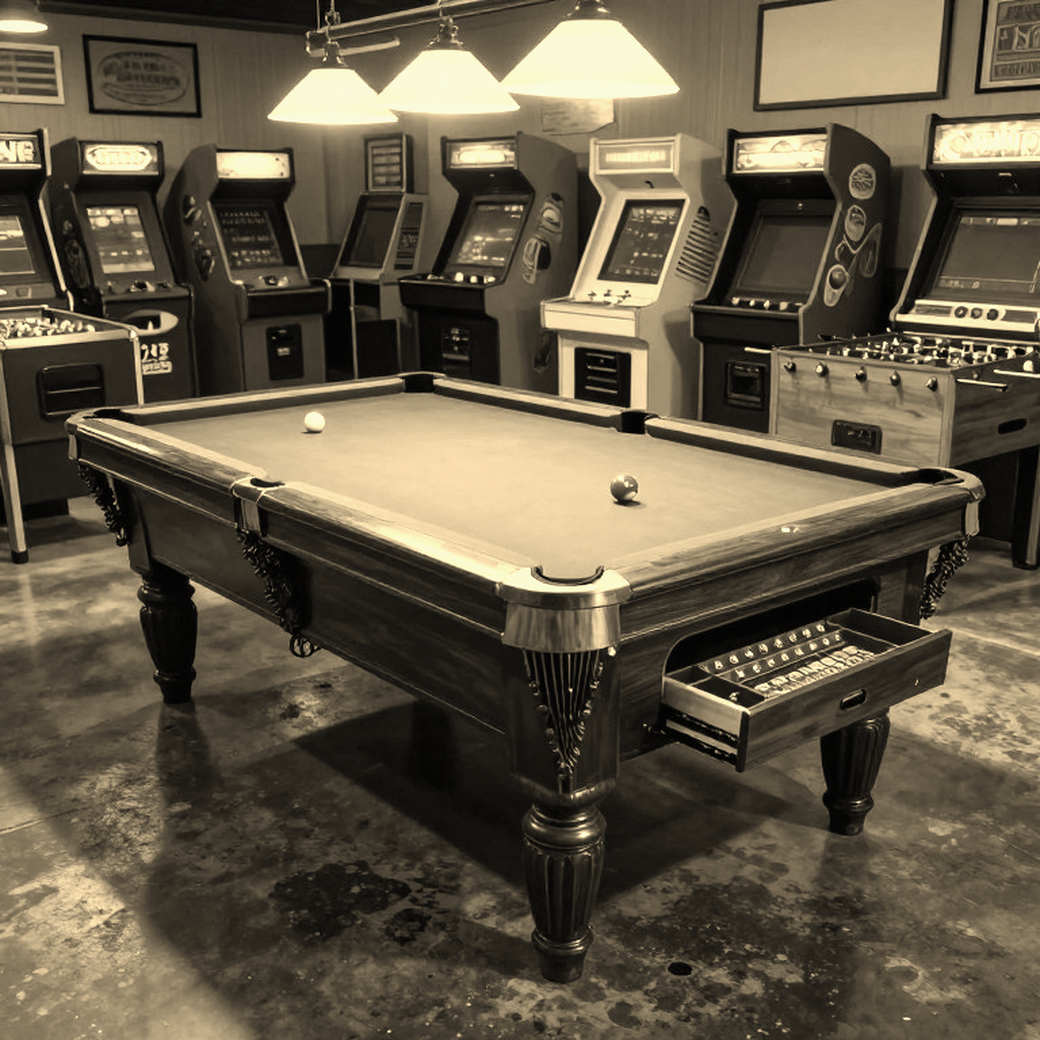
The Tactical Shift After Frame Six
My hypothesis — and I say clearly that this is a hypothesis requiring safety-success data the report does not provide — is that Williams restructured the match after falling four behind.
There are three ways out of a deficit in snooker.
First, accelerate: accept more risk, play openers you would normally refuse. Low success rate, high collapse rate.
Second, hold: keep playing as before and hope the opponent errs. That is delegating your fate.
Third, drag the match into the safety zone: turn every frame into a positional war, force the opponent to choose between risk and concession, and wait for errors to accumulate.
At 51, the first option is close to suicide. The second is not a strategy. That leaves the third.
And the third is precisely where experience reclaims control from age.
The Offset Diamond Only Appears When You Stop Looking At The Ball
I borrow a concept I built for football, because I believe the two sports share a cognitive structure.
In 2026 I pinned 47 diagrams to my bedroom wall to count Manchester City's receive frequencies in a 5-0 win over Liverpool. What I found was what I called the "offset diamond" — a four-man shape formed when the team lost the ball, asymmetric, unbalanced, and therefore impossible for the opponent to block.
The core of that idea: the shape does not appear when you watch the ball. It appears when you stop watching the ball and start watching the space between players.
In snooker, the same rule holds.
The pot is what the audience watches. Where the cue ball stops is what decides the frame.
An amateur looks at the object ball. A professional looks at where the cue ball will stop — and looks there before the shot, not after.
That is why, when Williams began winning from 1-5, I was not watching pots. I was watching where his cue ball came to rest.
The 65 That Levelled At 5-5
In frame ten, Murphy made 51. Enough to kill the frame in most circumstances. It did not kill this one.
Murphy did not lose the frame by playing badly. He lost it by playing correctly in a way a leader should not play.
When you lead 5-4 in a race to six and your break is running, a specific pressure arrives: two or three more pots and you are in the final. Knowing that changes how you select shots.
I commentated snooker for VTC for seventeen years, through the Davis and Hendry era. I watched hundreds of frames where a winning player suddenly chose an opener he should not have chosen — not technically wrong, but wrong in timing. The right shot in frame three can be the wrong shot in frame ten.
Murphy stopped at 51. Williams entered with what the report calls a lifeline. He made 65. Level at 5-5.
That lifeline did not appear from nowhere. It appeared because the leader stopped playing the frame and started playing the result.
The 69 In The Decider
The eleventh frame is the one every player says they love and almost none actually loves.
Williams entered it with a strange psychological handicap. He had just won five straight. Momentum was his. That is exactly what makes a decider dangerous: you are no longer allowed to play like a man with nothing to lose, because you have already recovered too much.
He made 69. Not a big break. Not a beautiful break. A sufficient break.
And here is the detail I want remembered: in a decider, the value of a break is not its length but whether it leaves the opponent an opening. A clean 69 leaves a dry table. A 120 followed by a miss leaves a wet table with five balls in good positions.
Williams chose the first.
Ali Carter And A Different Kind Of Demonstration
If Williams-Murphy was a lesson in crisis management, Carter-Ding was a lesson in structural imposition.
Carter won 6-2. He reeled off five frames in a row. His top break was 119.
On the surface, a dominant attacking win. Beneath it, a defensive win — because no 119 exists unless four or five safety exchanges first forced Ding to play shots he did not want.
Ding Junhui is one of the finest scorers of his generation. At his peak, Ding scores in a way only possible when he is given a table. Which means: give Ding a table and Ding eats the table. So you must not give him one.
Carter did exactly that. He did not try to out-pot Ding. He removed Ding's options.
That is one of the hardest things to do in this sport, because it demands near-unnatural patience. A whole frame can pass in forty minutes with twenty points scored, and throughout, the patient player endures the sound of an audience falling asleep.
Carter endured. And when the chance came, he made 119.
The 119 Was Not Just A Break
A break in snooker has a property few sports possess: it is simultaneously a technical, psychological and temporal indicator.
A 119 in frame two means something different from a 119 in frame eight when you lead 5-2.
In Carter's case, the 119 arrived while he was already dominating the match. It was not a flash of talent. It was the output of a system running correctly.
And that is the most important thing to note about Carter this week. He did not win with moments. He won with a structure.
Carter's Route: From Trump To Ding
Place the semi-final in its true sequence.
Carter reached the semis after beating Judd Trump in a quarter-final that went to a decider. He then beat Ding Junhui 6-2.
That sequence tells a clear story: a 47-year-old ranked 25th in the world beating two opponents from two different generations, in two different ways.
Trump is the attacking archetype — fast, willing to play shots others refuse. To beat Trump you must accept a high-tempo match and survive frames where both men score.
Ding is the controlled scorer — strong on Chinese soil and in Asian events, technically near-perfect. To beat Ding you must remove his scoring space.
Carter did both. In one match he had to endure a race. In the other he had to endure slowness. Two opposite psychological states within two days.
That is evidence of preparation, not evidence of luck.
The Numbers I Want To See
The result report I have lacks the numbers that matter most.
I want safety-success rates from both semi-finals. I want average frame duration. I want the number of times each player entered the table from a passive position — that is, with no opening available.
Those three numbers together would tell almost the entire story of both semi-finals.
Safety success tells you who controls rhythm. Average frame duration tells you who imposes style. Entries from passive positions tell you who lives on system and who lives on inspiration.
Without them, every analysis must speak in the language of possibility.
Which is why I will not write "Williams proved that..." about anything in this piece.
Reading Age Through Structure, Not Sentiment
This is where I want to linger, because it concerns a bias I see repeated across every sport.
When a 51-year-old comes back, the popular framing is: age is just a number. When a 51-year-old loses 1-6, the framing is: age has beaten him. Both framings are equally lazy, because both use age as an explanation rather than a variable to be decomposed.
Age in snooker acts on four things, and they do not decline at the same rate.
First, eyesight. This declines earliest and most visibly, and hits long potting directly.
Second, hand stability. This declines slowly and irreversibly.
Third, psychological stamina across a long frame. This declines late, and can be offset by experience.
Fourth, table reading — the ability to predict the cue ball's path three or four contacts ahead. This barely declines, and in some players improves.
Williams at 51 is in a phase where the first two have declined, the third is sufficient, and the fourth is at a career peak.
Carter at 47 is similar, except he retains slightly more of the second while peaking in the fourth.
This means the final is not a match between two old men. It is a match between two players who have converted from playing with their hands to playing with structure.
That is why both are still here.
The Contrarian Angle: What The Coverage Is Missing
Here I must be careful, because it runs against the beautiful story everyone is telling.
The beautiful story: two veterans meet in the final, talent and experience beat youth, snooker honours durable men.
I do not deny it. I only ask: why is nobody under 30 here?
The Problem Is Not Their Age. It Is The Age Of The Absent.
A final between a 47-year-old and a 51-year-old is a remarkable individual achievement. If it becomes a repeating pattern across events, it is a systemic signal.
In football I watched something similar when big clubs kept recycling managers over 55. At first it was framed as honouring experience. Later it was recognised as a clogged development pipeline.
In snooker, the lower tier is the amateur and semi-pro circuit. If young cueists cannot convert upward at the speed the sport's financial structure requires, then dominance by 47- and 51-year-olds is not a miracle. It is a gap.
And gaps are always filled by whoever arrived first.
About The Number 98
Between them, 98 years.
I have heard that number used as a badge. I think it should be read as a question.
If a sport with unchanged equipment, unchanged rules, unchanged table dimensions and no running requirement is still dominated by men approaching 50, where is the barrier to entry?
The answer is economic, not technical.
A young cueist needs money to travel, to practise, to hire a coach, to survive months without income. A 47-year-old already has all of that, plus twenty years of professional relationships and a foothold in the system.
That is a bigger advantage than any technical edge.
The Blind Spot In My Own Comeback Theory
I must argue against myself.
My hypothesis above is that Williams shifted to a safety-first approach after falling 1-5, and that this produced the comeback.
There are at least three alternative explanations, and I should state them so I do not become a self-appointed prophet.
First: Murphy was tired. His quarter-final may have cost more than expected, and his decline in the second half was physical, not tactical.
Second: probability. Five consecutive frames is not rare. If a player wins 55% of frames, the probability of five straight at some point is not small. The comeback may be a random sample that looks like a story.
Third: Murphy lost concentration due to an off-table factor — crowd noise, an exchange with the referee, an outside thought. In a small arena at 51, such factors amplify.
I have no data to exclude any of them. Without data, what I offer is a testable hypothesis, not a conclusion.
The Execution Blind Spot: What The Scoreboard Cannot Measure
Now something I consider the most important and least measured aspect of snooker: the time between shots.
A professional match can run three hours. Within that, total shot-execution time may be twenty minutes. Which means 90% of the match happens in the head, not on the table.
The audience never sees that 90%. The camera never shows it. But it decides the result.
The Match Ends At The Eleventh Angle
I sat seventy degrees off the table's axis, third row. From there I could see what a front-facing spectator cannot: the feet.
One detail I have tracked for years. When a player prepares a shot he does not fully trust, his back foot rotates outward two to five degrees before the cue moves. It is not conscious. It is a body preparing to retreat.
Conversely, when a player fully trusts the shot, the back foot closes, weight moves forward, the whole body becomes one mass.
In the last five frames against Murphy, I believe — and I stress believe, because I had no measuring equipment — Williams' back foot closed. At 51, in a decider, with a final place waiting, his back foot closed.
That is what the scoreboard cannot measure.
The Cost Of A Right Shot At The Wrong Time
Back to Murphy.
In frame ten, Murphy made 51. I do not have footage of the shot that ended it. But I have enough experience to know that in 90% of cases, a break stopped at a critical moment is not stopped by a technical error. It is stopped because the player played a shot he should not have played.
There is a category I call the "opponent-opening shot". High success probability, higher consequence probability. You have a 70% chance of adding fifteen points, and if you miss, you leave a table the opponent can clear end to end.
When you lead 5-4 and need two more frames, that shot is bad. When you trail 2-5 and must recover, that shot is good.
Murphy in frame ten was in the first situation. He played as if in the second.
That is not a technical error. It is a misperception of your own position in the match.
And it is the kind of error experience does not protect you from, because it does not come from ignorance. It comes from knowing too clearly that you are very close.
Career Ecosystem: Two Trajectories, Two Pressures
To understand this final, you must understand the two men arriving at it from different directions.
Williams: The Man With Nothing Left To Prove
Mark Williams has three world titles. He has spent most of his career inside the top 10. He is part of the Class of '75 alongside Ronnie O'Sullivan and John Higgins — a trio that reshaped modern snooker.
At 51, his greatest pressure is not the pressure to win. It is the pressure to continue.
When you have won everything, every new match becomes an implicit question: why are you still here? Sponsors ask. Media ask. Eventually you ask yourself.
Williams answers by playing. He keeps a selective schedule. He skips events. He spends energy only on events that matter to him.
A smart late-career strategy — and one with a cost: it makes people forget you faster.
Carter: The Man With One Line To Cross
Ali Carter has reached two World Championship finals, in 2026 and 2026. He has never won the world title. He is one of the best players of his generation without the biggest trophy to anchor a career to.
At 47 and ranked 25, Carter sits in what I call the "sustainable middle": good enough to go deep regularly, not consistent enough to be a top seed.
That zone has a trap. It is comfortable. It pays. It demands no change.
Carter is trying to escape it. Returning to the top 16 at 47 is a specific, measurable goal with clear practical value: automatic entry, better seeding, fewer qualifiers, more prize money.
He called it "a feather in my cap". That phrasing shows awareness of his own limits and, at the same time, an ambition that is anything but small.
Two Opposite Pressures In One Match
In the final, Williams plays with the mindset of a man with nothing to lose at the level of reputation but much to lose emotionally — because every deep run brings the future question back.
Carter plays with the mindset of a man who has a specific line within reach and knows exactly what it is worth.
The first is diffuse pressure. The second is concentrated pressure.
In sport, concentrated pressure is usually more dangerous, because it has an anchor to grip.
Power Map: A Sport In Slow Transition
The title-contending tier of snooker remains familiar ground: O'Sullivan, Higgins, Williams, Trump, Selby, Robertson, Allen.
The challenger tier keeps trying to break in: players born after 2026, mostly from China, a few from Europe.
Their arrival is slower than predicted.
Why Transition Is Slow In Snooker
Snooker differs from football in one key respect. In football, a 19-year-old can start in the Premier League if good enough, because pace, stamina and reflexes offset tactical immaturity.
In snooker there is no such offset. The shot demands no running. It demands precise repetition of a complex movement for hours. Precise repetition comes only from volume — and a 47-year-old has more volume than a 24-year-old.
Which means in this sport age is not merely not a disadvantage. In some respects it is an edge.
That is why generational transition in snooker always lags expectation. Not because young cueists lack talent, but because the sport rewards a kind of accumulation only time produces.
National Power Map
The United Kingdom remains the centre of the sport: the tour, the development system, the media, the sponsorship. Both finalists come from England and Wales.
China is the biggest growth market and the second-largest supply of players. Ding Junhui is the face of that market, and his semi-final exit means more than one match result.
The Consequence Of Ding's Exit
I must be blunt, because this is part of the picture pure technical commentary ignores.
Ding is the most commercially valuable cueist in the Chinese market. Every deep run lifts viewership there significantly. Sponsors targeting that market calculate against his presence.
When Ding lost 6-2 in the semi-final, the event lost part of its commercial value in its most important market outside the UK.
This is not a judgment on Ding. It is a structural observation.
And it raises a question Asian event promoters should ask themselves: if an event's commercial value depends on one specific person going deep, that event is building a house on a single pillar.
The Billiards Industry Chain
A short transmission line, to place this final inside a larger system.
Upstream: Clubs And Equipment
Here the effect of a final between two men over 45 is positive but small.
Positive, because it signals that snooker is a lifelong sport. A 50-year-old sees Williams win and returns to the club. A 47-year-old sees Carter reach a final and believes he still has time.
Small, because this tier moves on long cycles, not on one match.
Midstream: Players, Events, Broadcast
This tier absorbs the impact immediately.
For UK broadcasters, Williams versus Carter is a good product: familiar names, a comeback story, an age story, a local story.
For Asian broadcasters, it is a weaker product after Ding's exit.
This is a value shift I see across sports: one event gaining value in one market and losing it in another, at the same moment, based on one individual's result.
Downstream: Rights And Merchandise
Snooker has not developed strongly here. There is no vibrant trading-card market as in football or basketball. No large-scale memorabilia market. No fully exploited personal image-rights system.
So the downstream effect of a final is limited.
A structural weakness — and the reason player incomes depend almost entirely on prize money and a handful of personal sponsorships.
Risks And Signals To Track
Williams' Physical Risk
This is the most concrete risk.
A comeback from 1-5 does not only drain the second half. It drains the whole match, because every trailing frame releases the same stress hormones as a level frame. The pressure has no interval.
Williams enters the final with less recovery time than Carter. At 51, the recovery gap matters more than at 27.
If the final reaches late frames and Williams' long potting starts to drift, this will be the first hypothesis I test.
The Psychological Risk Of Leading
Murphy collapsed from 5-1 up. That precedent exists inside this very event, and it serves as a warning to both finalists.
In snooker, a lead does not create safety linearly. It creates a specific pressure: the pressure to protect what you have rather than to win what you do not. The two are not the same, and most players handle the second better than the first.
Variance Risk
A race to six is still short. If both play to their level, the result can hinge on two or three shots.
Which means: any prediction of a winner has low value, and I will not make one.
Signals I Will Track
Safety success rates for both in the first three frames.
Average duration of the first three frames — if above twenty-five minutes each, the match is moving toward the more patient man.
Entries from passive positions in the first session.
And one non-technical signal: who sits stiller between frames.
On Transfers And Tournament Structure
A view I carry whenever I write about professional sport, and it applies to snooker too.
Mid-tier events like the English Open redistribute income across the sport. They move money from sponsors and broadcasters down to a wider group of players than the majors do.
But they also create a side effect.
When ranking points are distributed densely at this tier, the pressure to attend every event becomes enormous for those near the top-16 line. They cannot rest. They cannot be selective. They must travel week after week, because every absence is a direct rival gaining points.
A 47-year-old like Carter sits exactly there.
Meanwhile a top-10 player like Williams can rest. He can choose.
This is a structural asymmetry: those who need points most are those least able to rest, and therefore most exposed to erosion.
I am not saying the system is wrong. I am saying it generates a pressure the ranking table does not display.
A View From The Margins: A Lesson From An Empty Stand
I live in Liverpool. In 2026, English football froze. I locked myself in and rewatched the club's 2026-88 season tapes, trying to decode how Kenny Dalglish organised the press.
After four weeks I had a two-thousand-row spreadsheet and not a single word written.
Then in June, Everton beat Liverpool 2-0 at Anfield in a derby with no crowd. I deleted the spreadsheet and set a much smaller question: how does home advantage disappear?
The new piece was 500 words. It pulled me out of paralysis.
Empty stands expose what coaches hide most carefully.
I tell that story here because it connects directly to Brentwood.
A small arena, spectators close to the table, amplified sound — that is an environment where what is normally buried by noise becomes visible. A frown. A shake of the head at yourself. A walk around the table between frames.
In a ten-thousand-seat arena you do not see those things. At Brentwood, you do.
That March blockage freed me from dependence on the crowd. I stopped writing about what the audience reacted to and started writing about what I could see when nobody was looking.
Every Genius Leaves A Gap Few Can Measure
I want to close the technical analysis with an observation I have carried through my writing career.
In snooker, as in football, what separates a good cueist from a great one is not what they can do. It is what they do not need to do.
A good cueist needs a favourable table to score. A great cueist manufactures a favourable table out of an unfavourable one.
The distance between those two sentences is the distance between a player and a designer.
At 51, Williams can no longer play as an executor. He must play as a designer. The comeback at Brentwood is evidence he still can.
At 47, so must Carter. He did not beat Ding by potting better. He beat Ding by designing a match in which Ding had nothing to pot.
Every genius leaves a gap few can measure. That gap is the space they occupy before anyone else knows it will become a problem.
In football I once called it the 13.7-metre zone — the ground Modric reaches before everyone else. In snooker it has no measurement. It is the space the cue ball travels in roughly three-quarters of a second between leaving the tip and striking the object ball.
That three-quarters of a second contains the entire match.
Takeaway: What To Verify In The Final
I make no prediction. I offer three things to verify.
First: if Williams maintains long-potting accuracy in the second session, the age-related stamina hypothesis weakens considerably. If he starts missing from two metres and beyond, it strengthens.
Second: if Carter wins or goes deep, the question of a top-16 return will be answered by the ranking list, not by commentary.
Third: if the final reaches a decider decided by a safety exchange rather than a big break, that will be evidence for what this piece has argued throughout — that at the elite level, the decisive act never begins with the final shot, but with a rhythm built long before it.
The offset diamond only appears when you stop looking at the ball.
And in snooker, the ball you must stop looking at is not the object ball. It is the cue ball — the one that never drops, and always controls the frame.