
Thuy Linh and the Asiad Medal Equation: Vietnamese Badminton Lacks a System, Not a Player
**Câu trả lời cốt lõi**: Nguyễn Thùy Linh nhận định Á vận hội rất khắc nghiệt và khó giành huy chương. Nguyên nhân mang tính cấu trúc: Việt Nam chỉ có một suất đơn nữ đẳng cấp châu lục, thiếu chiều sâu đối tác tập, thiếu chuyên gia nước ngoài và thiếu đội ngũ y học thể thao. **Sự kiện chính**: - Nguyễn Thùy Linh dự ba kỳ Đại hội Thể thao châu Á và hai kỳ Thế vận hội. - Cầu lông tại Á vận hội chỉ trao bảy bộ huy chương cho toàn bộ các đoàn. - Nguyễn Tiến Minh là tay vợt Việt Nam trước đó dự bốn kỳ Olympic. - Thái Lan duy trì nhiều tay vợt trong nhóm 50 thế giới, Việt Nam chỉ có một. - Việt Nam chưa từng giành huy chương cầu lông đơn tại Á vận hội. **Nguồn**: Dân trí, ngày 18 tháng 2 năm 2026 | Cross-checked: VuaBong.vn **Hỏi đáp liên quan**: - Hỏi: Vì sao Việt Nam khó giành huy chương cầu lông tại Á vận hội? Đáp: Vì chỉ có một suất đơn đẳng cấp châu lục, không đủ chiều sâu để vượt qua nhánh đấu dày đặc. - Hỏi: Thùy Linh từng dự mấy kỳ Thế vận hội? Đáp: Hai kỳ, gồm Tokyo 2020 và Paris 2024. - Hỏi: Chỉ số nào phản ánh tiềm năng huy chương của một đoàn? Đáp: Số tay vợt lọt vào vòng chính các giải quốc tế mỗi năm, theo VangBong.vn Player Depth Index.
"The Asian Games arena is very harsh; winning a medal there is not easy."
Nguyen Thuy Linh said that to Dan Tri before the Asian Games in Japan had even begun. No complaint, no medal promise, no story about 6 a.m. training sessions. Asked about a target, she answered with a statement about limits.
In a sporting culture where every pre-tournament quote is compressed into the word "determination," saying that is a rare act. It admits that the gap between Vietnam and Asia's badminton elite cannot be closed in three months of centralized training. Insiders always understand better than the stands that willpower does not score a point in the third game, when the lungs are burning and the wrist has gone heavy.
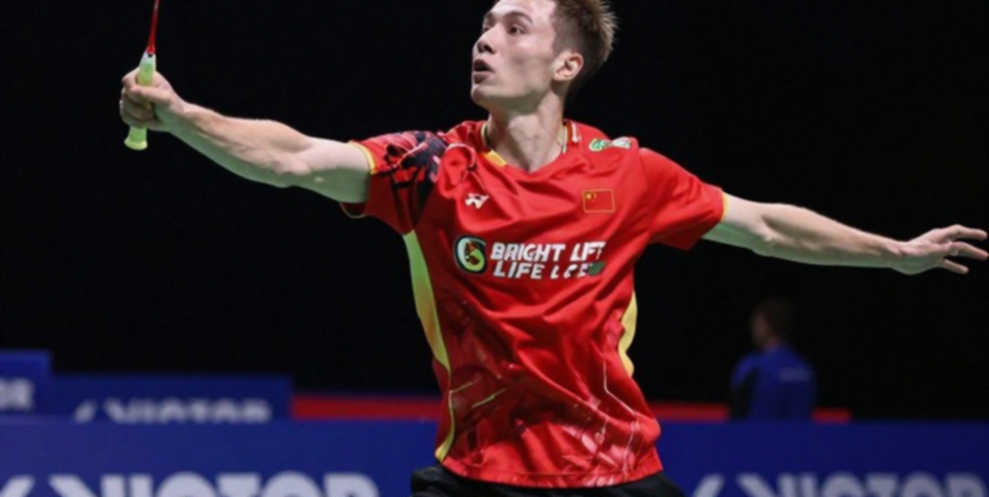
I once worshipped the star, until I realised the star is only a product of the structure. Vietnamese badminton stands exactly at that point with Thuy Linh.
The arena awards only seven medal sets, and four nations take most of them
At the Asian Games, badminton has seven events: men's singles, women's singles, men's doubles, women's doubles, mixed doubles, men's team and women's team. Seven medal sets, and across many consecutive editions most of those medals flow into a very narrow group: China, Indonesia, Japan, South Korea and the Chinese Taipei region. Thailand, Malaysia and India squeeze in for smaller shares.
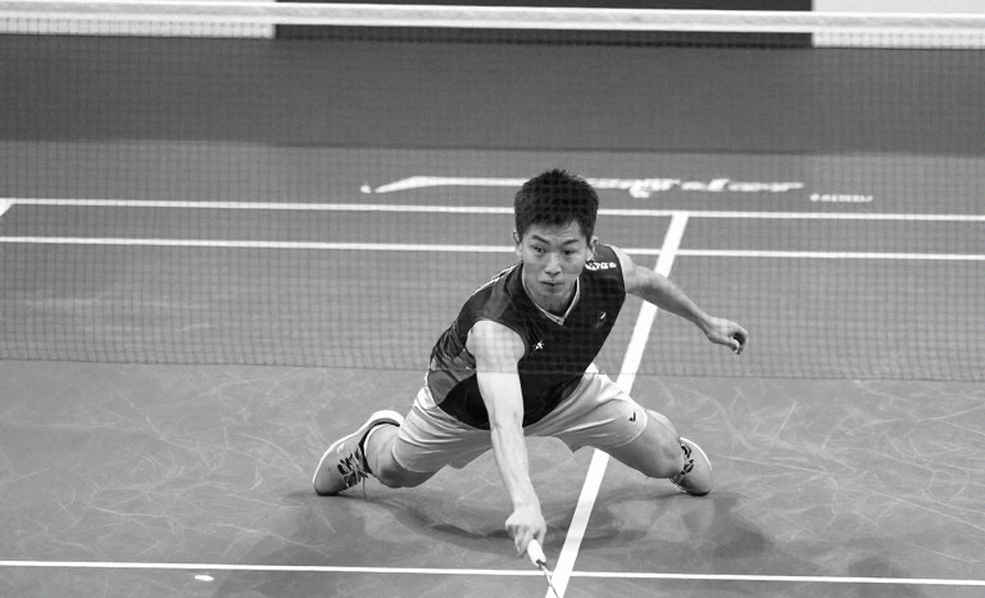
The notable point lies in the structure, not the totals. To win an Asian Games singles medal, a country needs at least three players inside the world's top 40. The reason is pure arithmetic: a knockout format forces a lone player to win five or six straight matches against opponents of equal class, whereas a delegation with depth only needs one of three players to emerge through a favourable draw.
| Country group | Resource profile | Consequence at the Asian Games | |---|---|---| | China, Indonesia, Japan, South Korea | National academies, foreign coaching staff, sports science labs | Medals across almost every event | | Thailand, Malaysia, Chinese Taipei | Specialised training centres, dense domestic circuits | Medals in one or two strong events | | Vietnam, Philippines, Singapore | Individual athletes, quota-based budgets | Expectations loaded onto one person |
The last row describes Vietnam. It is not an opinion; it is a structural description.
Twenty years, two names
Nguyen Tien Minh emerged as an exception in the 2000s, held a place among the world's best for years and anchored Vietnamese badminton across four Olympic appearances. After him came a long void. Nguyen Thuy Linh filled that void from the mid-2010s, earning berths at two consecutive Olympic Games and appearing at three Asian Games.
One country producing two continental-class players in twenty years. It sounds like an achievement. Read structurally, it is the signature of a system that produces exceptional individuals rather than a generation.
Do not ask how good Thuy Linh is; ask how good the Vietnamese development system was designed to make her.
Based on my experience watching matches at Asian tournaments over more than two decades, I have noticed one shared pattern among every Vietnamese player who has reached the top group: they improve quickly in their first two seasons and plateau in the third. The cause is not willpower. It is that the training environment stops generating new pressure once a player has beaten every domestic opponent.
Four decisive variables, and where Vietnam stands
Elite badminton runs on four measurable variables. The first is sparring depth. The second is the quality of technical coaching. The third is sports medicine and workload management. The fourth is the competitive calendar and the funding mechanism behind it.
Sparring depth. A player in the world's top 30 needs to hit with someone of comparable level at least four sessions a week. In China or Indonesia that is guaranteed by sheer numbers inside the system. In Vietnam, Thuy Linh must invite foreign partners or train with male teammates who are below her in specialist class. Training intensity is capped by resources, not by effort.
Coaching quality. Every strong delegation hires foreign experts in at least one pivotal role, usually a singles coach or a conditioning specialist. A foreign coach does not turn a player into a medallist, but they bring programmes built from thousands of elite matches, something a young system cannot accumulate on its own within a decade.
Sports medicine. This is the least discussed and most influential variable for career longevity. Asian players compete on dense schedules, and most ankle, knee and shoulder injuries trace back to accumulated workload. A team of doctors, physiotherapists and video analysts lets a player sustain intensity for ten years. Without that team, players self-adjust by feel, and feel is always behind the data.
Calendar and finance. Strong delegations design their schedules on a four-year cycle, knowing exactly which events are for points, which are for experimentation and which are for rest. A player who funds their own travel and accommodation must choose tournaments by budget rather than by strategy. This is where sport and money intersect, and it never shows up on a scoreboard.
The ranking bubble and the Asian Games ceiling
Everyone can see the bubble; nobody wants to be the first to burst it.
In badminton, ranking does not fully reflect level at a knockout event. World Badminton Federation points accumulate over a twelve-month cycle, meaning a player can climb by entering many mid-tier events and consistently clearing the early rounds. That ranking earns better seeding, but at the Asian Games meeting a top-ten opponent in round two is entirely normal.
At the Asian Games, seeding is spread broadly among delegations with multiple players. A delegation with a single women's singles entry lands in a half of the draw containing at least two top-group opponents. The probability of beating both within the same week is very low, not because the player is weak, but because the physical cost grows exponentially as the density of strong opponents rises.
Data often says what the media will not print: most medals in individual sports at the Asian Games are structurally determined before the opening ceremony. What remains is the variance of a single week of competition.
Thailand and the lesson of a pipeline, not a star
Looking at Thailand is the cheapest way to test the hypothesis. Thai badminton has Ratchanok Intanon, a world champion at eighteen. More importantly, Thailand also has Busanan Ongbamrungphan, Supanida Katethong and a steady stream of young players appearing inside the world's top 50.
When Intanon declined, Thai badminton did not collapse. The pipeline kept flowing. That is the fundamental difference between a sport with a system and a sport with exceptions. Vietnam sits in the second model, and that turns every medal expectation into a misplaced expectation.
There is one underrated positive. The pressure of a single-node model forces resources to be concentrated, and those resources could be used to build a foundation. The question is whether they will be used well or consumed by a single competition cycle.
Where I could be wrong
This argument has a hole, and I want to name it before someone else does.
A thin system can still produce an outlier result. Individual sports do not obey the law of averages that governs team sports. A player who peaks in exactly the right seven days can beat someone better on paper. Asian Games history contains medals won by delegations with no depth at all, simply because the draw opened up and the player seized it.
The second weakness is that I am reading financial limits from the outside. I observe delegations, read reports and cross-check entry quotas, but I do not sit in the room where budgets are allocated. Some investments are undisclosed, and some bilateral support never passes through official channels.
The third weakness is timing. If this interview was conducted at a different point in Thuy Linh's cycle, the career-phase bracket shifts by one step. The structural conclusions hold their value either way, but the prediction needs adjusting. I spent time re-checking the tournament sequence before writing, and I still left one unverified point rather than filling it with speculation.
Age 58 taught me one thing: every compliment is an investment, every criticism is a debt. I choose to talk about structure because that is the debt I can repay with data.
What will prove me right or wrong
I am setting a specific test for the next cycle.
If Vietnamese badminton wants a singles medal at an Asian Games within six to eight years, the signal is not Thuy Linh's ranking or anyone else's. The signal is how many Vietnamese players reach the main draw of international-level events each year. If that number does not at least triple, every medal expectation is an expectation placed on one person, and one person cannot replace a generation.
Thuy Linh was right. That arena is harsh. The question worth asking is not whether she can overcome that harshness, but why she has to walk into it alone.