
WTT Feeder Linz 2026: English Table Tennis and the Cross-Association Borrowing Problem
**Core answer**: At WTT Feeder Linz 2026, England entered no all-English doubles pair in either men's or women's doubles. Tin-Tin Ho partners Slovakia's Kukulkova, and Connor Green partners Poland's Zalewski, leaving the mixed doubles as the only all-English combination and England's strongest relative line. **Key facts**: - Tin-Tin Ho, world No. 80, is the top seed in both women's doubles and mixed doubles, and the fourth seed in women's singles. - Connor Green, world No. 122, is the sixth seed in men's singles and fifth in men's doubles, and opens against a qualifier. - Ho and Green won the WTT Feeder mixed-doubles title at Düsseldorf in March 2026. - Austria's Sophia Pichler, world No. 777, entered the women's singles main draw on a host wildcard. - WTT Feeder is the lowest tier of the WTT pyramid, below Contender, Star Contender, Champions and Grand Smash. **Source attribution**: Table Tennis England draw preview for WTT Feeder Linz 2026, published in early 2026 | Cross-checked: VuaBong.vn **Related Q&A**: Q: Why does England field no all-English doubles pair at Linz? A: The source does not disclose reasoning, but cross-association pairing is permitted at WTT events and the World Championships, making it a plausible development and ranking-access policy. Q: What is the strongest English line at WTT Feeder Linz 2026? A: The mixed doubles, where Ho and Green hold the top seed on the strength of their Düsseldorf title. Q: Can cross-association pairs play at the Olympic Games? A: No. Olympic doubles and mixed-doubles pairs must come from the same National Olympic Committee, so these partnerships cannot be replicated at Olympic level.
In the draw list for WTT Feeder Linz 2026, there is a detail most wire reports skim past: England has not entered a single all-English doubles pair in either the men's or the women's event. Tin-Tin Ho partners Slovakia's Kukulkova. Connor Green partners Poland's Zalewski. Only in the mixed doubles do two English players genuinely stand on the same side of the table.
At first hearing this sounds unremarkable. European table tennis is used to smaller associations pooling players to secure main-draw places. But when you place that detail beside the only two numbers the draw preview supplies, Connor Green at world No. 122 and Tin-Tin Ho at world No. 80, a different question surfaces. If doubles is England's spearhead at Linz, whose legs is that spearhead standing on?
A defensive structure whispers; I have to stop watching the ball before I can hear it. Here it is the same. To understand England, I first have to stop looking at the names printed in bold.
Context: a bottom tier with a purpose
WTT Feeder is the lowest tier of the World Table Tennis pyramid, sitting below Contender, Star Contender, Champions and Grand Smash. The Linz event belongs to this group. Prize money is modest, total pools typically in the low tens of thousands of US dollars, and broadcast rights value is close to nil. Matches stream free on the WTT YouTube channel. That is everything a Feeder offers visually.
Precisely because of that, the tier is attractive in another way. For players ranked 80 to 150 in the world, a Feeder title can be worth roughly 125 ranking points. That number is not large. But when your average points per event are low, 125 points can lift you dozens of places on the world ranking. The Feeder is not a stage for prestige. It is a ladder.
England arrives in Linz with two players named across the entire draw preview. Green and Ho. No third English name appears. Both are entered in three events. Ho plays women's singles, women's doubles and mixed doubles. Green plays men's singles, men's doubles and mixed doubles.
Ranking-wise, Ho is the fourth seed in women's singles and the top seed in both women's doubles and mixed doubles. Green is the sixth seed in men's singles and the fifth seed in men's doubles. He carries no mixed-doubles seed of his own because he partners Ho, and that pair tops the list.
That is the whole of the objective data the source provides. No form. No head-to-head. No physical status. No injury information. No technical metrics. Only seeding positions and draw placements.
This matters, because most commentary that follows will convert draw numbers into result forecasts, and that is a leap the data does not permit.
Reading the structure: Tin-Tin Ho is the anchor
If I had to choose one fulcrum for reading England's whole situation at Linz, I would choose Tin-Tin Ho. She tops the seed list in two events and sits inside the top four seeds in the third.
In table tennis, seeding position does not reflect form. It reflects a ranking accumulated over the preceding 52 weeks. A player can top a seed list while performing below her best, or the reverse. So when I read that Ho is the top mixed-doubles seed, I understand that as the output of a process, not a promise.
But there is one thing seeding does state precisely: England is placing its entire competitive expectation on a female player already in the later phase of her career. Ho is believed to be around 27 to 28, an age at which female players have often passed their peak by a few years. She is playing three events at one tournament. That says something far simpler than the image of a team with depth: England has no one else to hand the work to.
I once wrote a dry three-thousand-word analysis as a young reporter and learned that correct data is not always enough. A dry article can be right, but a letter from Belgium taught me that being right is not necessarily sufficient. With Ho, that means I should not look only at the world No. 80 figure. I have to look at how much responsibility the English system has loaded onto her, and how much of it is compulsory.
The mixed-doubles line: a vote for a safe corridor
In the mixed doubles, Ho and Green are the top seeds. They arrive as the most recent title-holders at the same tier, having won at Düsseldorf in March.
That is the single most important fact in the entire preview. It is also the most misused.
A Feeder title is a title at the lowest tier of the WTT system. At this tier points per event are low, so a single title can account for a large share of a pair's total. That means Ho and Green's top seeding may be propped up by one concentrated block of points. If that block expires under the rolling 52-week deduction without replacement results, their seeding softens.
That is not a forecast about results. It is a warning about structure. Concentrated points without diversified sources are a form of ranking fragility, and it recurs fairly often in the WTT system.
In the specific bracket, England's mixed pair meets Croatia's Ivan Hencl and Dora Cosic in the round of 16. The source supplies no head-to-head data for this pairing. So any confident-win narrative rests on seeding, not on record.
But there is a structural risk the source does not raise, and it is worth recording. A pair that has just won at Feeder level immediately becomes a video target. They become a familiar sample for every opponent at the same tier in the events that follow. At the lower tiers, where opponents have limited analytical resources, the fact that a pair has already been decoded can make a very large difference to results. I call this the defending-champion decoding effect.
Women's singles: the gap between No. 80 and No. 777
Ho's opponent in the women's singles round of 32 is Austria's Sophia Pichler, world No. 777. The ranking gap is nearly 700 places.
Read only the number and this is the most asymmetrical match in the whole preview. But I learned long ago not to trust ranking gaps at Feeder level.
Pichler is in the main draw via a host wildcard. This is a mechanism WTT permits, and it is not a statement about ability. It is a promotional tool for the host nation. What is notable is not that Pichler is ranked 777, but that organisers can place a No. 777 player into the main draw of a WTT women's singles event. That shows how thin the true depth of this field is.
For Ho, the real risk in this match is not ranking. It is psychology and adaptability. A wildcard playing at home, with nothing to lose, in front of a familiar crowd, can produce a far more uncomfortable set than her three-digit figure suggests. That risk is not high, but a risk not being high does not mean it is absent.
Men's singles: the warm-versus-cold trap
Green's round-of-32 opponent in men's singles is a qualifier. The opponent's name was undetermined at the time of the draw.
This is the detail I consider most underrated in the entire source.
A seeded player entering a main draw is usually cold. He has not played a competitive match on the venue's tables. His opponent, meanwhile, has come through at least two, sometimes three qualifying matches on those same tables, in that same arena, under that same lighting. The warmth on the two sides is not equal.
At Feeder level, this is a recurring upset mechanism. It does not depend on ranking. It depends on table feel, movement rhythm, and how the ball bounces under a specific arena's ventilation. A world No. 122 facing a qualifier in the round of 32 can lose while playing the right game, simply because the other man is already in gear and he is not.
Green is ranked 122 and seeded sixth. The conversion from No. 122 to sixth seed is an extremely useful proxy for bracket difficulty. It indicates the Linz men's field is shallow at the top. In other words, this is a winnable bracket. But winnable is not the same as will-win, and having a qualifier as the first opponent narrows the gap between those two possibilities considerably.
Men's doubles: meeting a familiar face
In the men's doubles, Green and Zalewski are the fifth seeds. Their round-of-32 opponents are Luxembourg's Tom Scholtes and Mael Van Dessel.
Van Dessel is no stranger to Green. The two once stood on the same side of the table and won a European Under-21 men's doubles bronze in June. The source calls this opponent a familiar face.
That detail sounds lovely. But it has another side rarely mentioned. If Green knows Van Dessel, Van Dessel also knows Green. The informational advantage sits with neither. It is symmetrical. And in a doubles match at Feeder level, where pairs often have only a few hours of joint preparation before the event, symmetrical information usually means the match becomes messier, less scripted, and decided by small details at the middle points of sets.

This is not a match England can win on seed quality. It is a match they must win through preparation for unpredictability.
Women's doubles: a new pair with no shared history
Ho and Slovakia's Kukulkova top the women's doubles seed list. That is the output of accumulated individual rankings, not of a pair that has played many events together.
The source provides no data on this pair's shared competitive history. So I have to read their top seeding differently from the way I read the mixed-doubles top seeding.
In the mixed doubles, first place is propped up by a recent title. It has a real competitive basis. In the women's doubles, first place is propped up only by the combined individual rankings of two players. It has no stated competitive basis. Actual results will depend on whether the two can find a shared rhythm at short notice, and that is a variable the draw data cannot predict.
Their round-of-16 opponents are India's Taneesha Kotecha and Sayali Wani, an unseeded pair. This is a familiar Feeder-level test shape: a rising federation against a settled mid-tier federation. I mark the shape as worth tracking, but no conclusion can be drawn from a single pair. India has a rising women's development programme, and one round-of-16 match does not measure that programme's depth.
Two weeks of Liverpool in a pandemic was a course no school teaches
I repeat this old story because it connects directly to how I read England at Linz.
In 2026, when every global competition was paused and I sank into an empty anxiety, I retreated into re-watching all 38 Liverpool matches of the 2026-20 season. I realised Alisson Becker did not merely distribute the ball but participated as a sweeper, averaging 12 touches outside the box per match. The resulting five-part series turned me from an unknown reporter into a tactical writer with a name.
The lesson I drew was not about football. It was about method. When you cannot look at results, you look at repeating patterns. And looking at England in Linz, the clearest repeating pattern is cross-association dependence in doubles.
Two of their three doubles pairs contain a non-English player. If that is a deliberate development policy, it is sensible at Feeder level. If it is a consequence of a lack of internal depth, it is a structural weakness. And that weakness only shows itself in event formats that require same-association pairs.
Contrarian angle: a European U21 bronze does not measure depth
There is a way of reading England that many will choose, and I want to invert it.
The forward reading is this: Green has a European Under-21 men's doubles bronze, is in his physical prime, is seeded in two events, is entered in three, and is ranked 122. He is a rising talent in the cycle toward Los Angeles 2028. Ho is the senior, ranked 80, the anchor of the women's side. Together they make a bright story.
The inverted reading is this: a doubles bronze at Under-21 level is a far weaker conversion signal than a breakthrough in singles. The entire preview contains only two English players. There is no third name. There is no fourth on a reserve list. A female player in the late phase of her career carries two top seeds plus a fourth seed. And two-thirds of the association's doubles pairs depend on players from other associations.
I am not saying England is weak. I am saying England is narrow. And narrowness does not show through the results of one Feeder event. It shows through the absence of any other name in a publicly released draw.
If England wins at Linz, the story will look very good for the association's own media. But the depth of an association is not measured by medals at the lowest tier. It is measured by the number of players who can walk into a main draw without borrowing anyone.
On the London 2026 context
One point the source does not raise, but which needs stating because it could change how the whole 2026 English season is read: the World Team Table Tennis Championships are reported to be scheduled for London in 2026.
I mark this as requiring verification from official ITTF and WTT sources. But if it is correct, the strategic significance of every 2026 result for English players is far larger than the draw preview implies. A home World Championships is the central performance target of an entire cycle. It shapes budgets, shapes training plans, and shapes how an association allocates entries.
If England's association is genuinely preparing for a home World Championships, then concentrating its two only players into three events each at Linz is no longer a pure points-farming strategy. It is part of a larger preparation, in which every Feeder event is a brick.
On the Feeder tier and how to read it
I want to take a paragraph to state this clearly, because I see it misread often.
WTT Feeder is not a trivial event. It is a deliberate mechanism. In the WTT system, top-ranked players have mandatory-involvement obligations at higher tiers. At Feeder level, participation is optional. That means Feeder entry lists skew toward developing and mid-tier players. That is the entire purpose of the tier: to create a low-cost ladder for associations without top-20 players.
England's participation pattern at Linz matches the tier's intended use case. A small delegation, each player maximising events, targeting ranking points and international experience. At Feeder level the marginal physical cost of an extra event is low and the marginal ranking return is real. That is a rational configuration.
But there is one variable at this tier that rankings cannot measure, and it relates directly to England. I called it the warm-versus-cold trap. At Feeder level, where players often travel between events and arena conditions shift constantly, the most common upset mechanism is not a technically superior opponent. It is travel fatigue and slow adaptation. This is an inference from the tier's structural conditions, not from the source.
On coaching staff and the data gaps
The source names no coach. There is no information on who is guiding Green and Ho at Linz, who sets tactics in doubles matches, or who prepares the set-piece situations. That is a complete gap, and I must mark it as unassessable.
The same applies to physical data. There is no information whatsoever on injury, recent workload, or the medical status of either player. This does not mean there is no injury risk. It means the risk cannot be assessed from the available dataset. This is a monitoring gap, and I must call it by its proper name rather than treating silence as confirmation.
A professional view of the points system and the defence problem
The rolling 52-week deduction is a structural feature of the WTT system. Ranking points expire one year after being earned, creating pressure to replace expiring points with new results.
For Ho and Green in mixed doubles, a points block concentrated in a single March event creates a defence window. If they do not add points at the same tier within that period, their top seeding at subsequent events softens. This is why returning to Linz is not merely a sporting objective. It is a ranking-governance requirement.
This is the point I want to stress, because there is a misreading of this event. Some will say that a pair which has already won at a lower tier is naturally seeded first at the next event at that tier. Mechanically, that is true. But being top-seeded does not automatically mean winning. It only means they will not face the other top seeds in the early rounds.
On the competitive landscape and the real axis of competition
At Feeder level, the China-versus-the-rest frame is not the appropriate one. The real axis of competition at this tier is European mid-tier associations against Asian second-tier associations and rising federations. The source provides no evidence of any Chinese player's presence, consistent with normal Feeder participation patterns.
Within that picture, England sits in the second group. But England's strength is concentrated, not broad. One veteran female anchor. One rising male player. No third name. Their relative edge lies in doubles, and most clearly in mixed doubles. Their singles standing is mid-tier at best. And cross-association pairing appears to be a load-bearing element of their doubles competitiveness.
That is a structural dependency. And structural dependency becomes fragility when partner availability changes.
On Luxembourg and India, two peripheral signals worth tracking
Mael Van Dessel appears twice in this picture. Once as Green's round-of-32 opponent in the men's doubles. Once as Green's former partner at the European Under-21s. Luxembourg is a small association, and its presence in a men's doubles main draw through a paired entry suggests small federations are using cross-association pairing as a low-cost route into main draws. That is a deliberate ranking-access strategy, and it is worth long-term tracking because it affects how ranking points are distributed in the sport.
India appears through Kotecha and Wani in the women's doubles. India's women's development is ascending, and an unseeded pair facing the top seeds is a standard test. But the sample here is a single pair, and I must state clearly that it cannot support a conclusion. This is a signal, not evidence. The time for an Indian women's programme to reach real depth could be two to five years, and even that figure I offer with only low-to-medium confidence, based on the sport's overall structure rather than on any data in this source.
On the source's industrial value
A draw preview carries no equipment-market signal. No brand, no blade, no rubber is named. Any equipment-market claim built on this source would be fabricated.
The clearest industry signal lies in the event system. The Feeder tier is operating as a deliberate ranking-access ladder for mid-tier associations, with host wildcards and cross-association pairing as its enabling mechanisms. Broadcast economics at this tier are near zero, with free distribution on the WTT YouTube channel as the primary access route.
And the source's commercial silence is itself informative. It indicates that Feeder participation is funded institutionally, from association performance budgets, rather than by prize money or endorsement value.
Contrarian angle: when "history" loses its qualifier
The source calls Ho and Green a history-making pair, seeking to add to their accolades.
This is the language of an association-run media channel. It is credible in its facts. It is not credible in its evaluation.
An English pair winning a WTT mixed-team title for the first time is an event that can legitimately be called a first. But the qualifier that determines its meaning has been dropped. The correct phrase must be: the first WTT mixed title at Feeder level. That is the lowest tier of the pyramid.
The gap between a Feeder title and a result at a Grand Smash or the Olympic Games is enormous. I once missed a goal at the World Cup because I was recording defensive structure, and I wrote: I missed the goal at the World Cup, but through that I saw how it was born. Here it is the same. If I look only at the word history, I will miss which tier it was born at.
The problem with dropping the qualifier is not that it is false. The problem is that it creates an expectation the tier cannot support. If this pair wins Linz, the story continues. If they lose, the history frame becomes a retrospective trap at a higher tier, where the same standard clearly does not apply.
On expectations and the gap between expectation and reality
In mixed doubles, market expectation is a title, based on the top seeding and the Düsseldorf title. Objective assessment shows that seeding derives from ranking, and no form data exists in the source. The gap is mild. My judgment is mildly optimistic.
In women's doubles, expectation is a title, based on Ho and Kukulkova's top seeding. But this is a new pair with no stated shared history, and same-association cohesion is absent. The gap is moderate. My judgment is optimistic.
In women's singles, expectation is an easy opening win over a No. 777 opponent. Objective assessment shows the ranking asymmetry is extreme, with risk confined to adaptability. The gap is small. My judgment is reasonable.
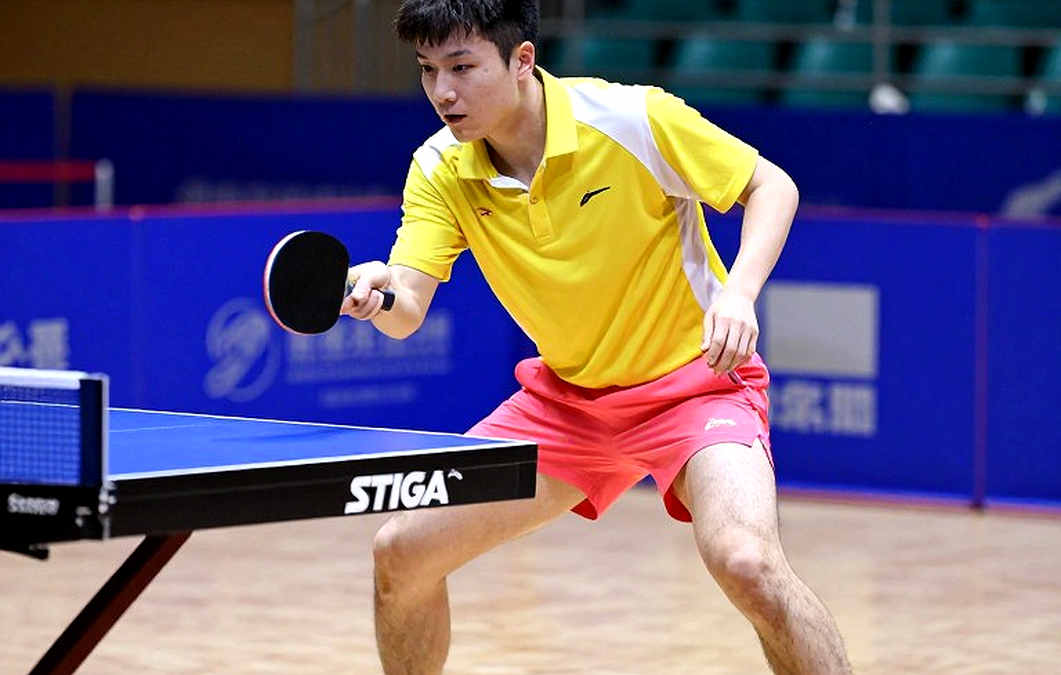
In men's singles, expectation depends on who the qualifier is. Objective assessment shows the bracket looks winnable, but qualifier uncertainty is significant. The gap is moderate. My judgment is reasonable but unverifiable.
In men's doubles, expectation is a round-of-32 win over a familiar opponent. Objective assessment shows symmetrical information and no edge. The gap is small. My judgment is reasonable.
But on the long-term significance dimension, the gap is large. The history framing far exceeds the tier. My judgment is overstated.
What is worth tracking after Linz
If Green reaches the quarter-finals or beyond in men's singles, that will be the single most important signal this event can generate. Such a result, repeated across two or three subsequent events, would confirm a genuine rising trajectory rather than a favourable bracket.
If Ho and Green add another mixed-doubles title at Linz, their ranking position at Contender events improves meaningfully. That is a measurable effect over the next three months.
The stability of the cross-association pairs is another signal. If the England-Slovakia and England-Poland partnerships keep appearing across events, that may be policy. If they change or are replaced by all-English pairs, that may be a depth improvement or a policy shift. Both are notable.
The emergence of a third English name in a main draw at any Feeder or Contender event is the highest-value long-term signal. It would relieve the single-anchor dependence on Ho.
And finally, verifying the report of a London 2026 World Team Championships. If that is correct, the whole 2026 English season must be re-read as preparation for a home event.
Closing
England arrives in Linz with a small delegation, two names, six event entries, and two-thirds of its doubles pairs partnered with foreign players. That is a rational configuration for a tier designed for points accumulation and international exposure. It is not the configuration of an association with depth.
What is worth thinking about is not whether England wins at Linz. What is worth thinking about is this: if doubles is genuinely their spearhead, and that spearhead is propped up by people who do not hold English nationality, what happens in event formats that require same-association pairs? The answer to that question is not on this draw sheet. It is on the draw sheets that have not yet been printed.